


Forty Years of Walking Together: A Year-End Conversation with the Chief Functionary
On 31 December 2025, PANI’s extended leadership came together for a special year-end meeting with the Founder and Chief Functionary, Shri Bharat Bhushan Ji. This was a reflective pause at the close of an intense year and on the threshold of a historic milestone. As PANI completes 40 years, the gathering was more of a shared conversation about journey, responsibility and the road ahead.
Leaders from different programmes and regions spoke candidly about their experiences from working with communities, working with PANI’s team, leadership’s guidance, what each one of them learned etc. Alongside this, they also recalled the many victories such as the awareness about mental health of youth in communities we work with, farmers adopting climate-resilient practices, young women stepping into leadership in different geographies, local institutions becoming more responsive and teams holding each other through uncertainty. The growth and development journey of PANI was also discussed.
The Chief Functionary invited everyone to see these experiences as part of a longer arc that began four decades ago with a belief in people’s agency and constitutional values. Looking ahead to 2026 and beyond, the discussion focused on strengthening collective leadership, deepening community-rooted work and nurturing the next generation of PANI leaders.
The meeting closed with a shared commitment that each one of us to carry forward PANI’s 40-year legacy with humility, and renewed energy for justice and dignity for people.
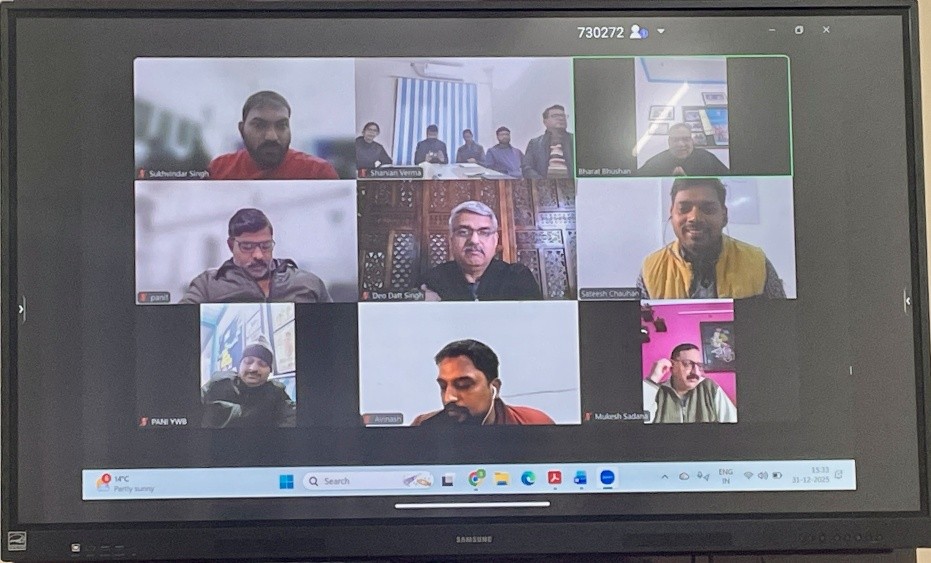
A year end conversation of PANI’s team with Shri Bharat Bhushan Ji, Chief Functionary of PANI
PANI at the 13th Indian Social Work Conference: Taking Grassroots Learning to a National Platform
In November 2025, PANI participated in the 13th Indian Social Work Conference (ISWC) held at Centurion University of Technology and Management, Bhubaneswar. The conference, organised by the National Association of Professional Social Workers in India (NAPSWI), brought together practitioners, academics and students from across the country and abroad to reflect on “Technology, Innovation and Society: Challenges and Opportunities for Eco-Social Work and Sustainable Development.”
PANI’s Chief Functionary, Mr. Bharat Bhushan, was invited as a plenary speaker in the session on “Green Technologies and Social Entrepreneurship: Pathways to Sustainable Livelihoods and Community Empowerment.” Drawing on four decades of experience, he spoke about how sustainable livelihoods, gender equality and community development are deeply interconnected in PANI’s work. He highlighted field-based examples where women’s collectives have led water governance, climate-resilient agriculture and local institution-building, demonstrating that genuine community empowerment must be anchored in constitutional values and everyday struggles for dignity.
Alongside this, PANI contributed a research paper titled “Women-Led GPDP: Reflecting on the Role of NGOs in Expanding Capabilities of Women for Active Participation in Gram Panchayat Development Planning.” Presented in a technical session on digital literacy and skill development, the paper distilled learnings from the DWLL project in Mall block, Lucknow, showcasing how organised women’s groups have accessed public entitlements, diversified livelihoods and institutionalised water budgeting across 30 Gram Panchayats. The presentation generated rich discussion and interest from universities keen to collaborate on field placements and research.
PANI’s presence at ISWC 2025 reaffirmed that grounded, long-term work with rural communities has much to offer to national debates on social work and development practice. It also underscored the importance of taking grassroots voices into academic and policy spaces, so that models shaped in villages can inform how tomorrow’s social workers think, learn and act.
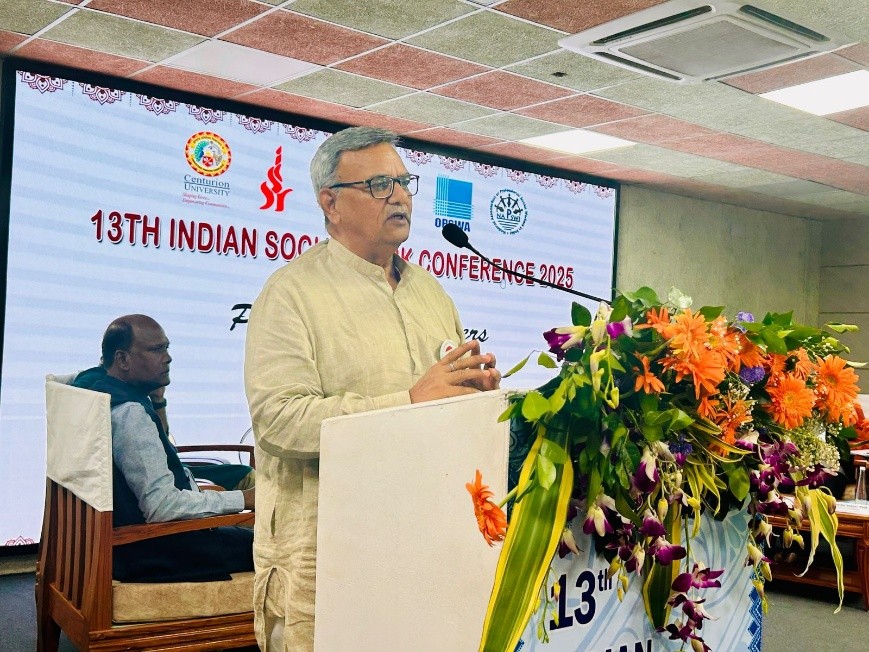
Shri Bharat Bhushan Ji speaking at the ISWC 2025.
Honouring Women-Led Innovation: FICCI Recognition for the Abhayam Krishi Kendra Model
People’s Action for National Integration (PANI) is honoured to share that the Abhayam Krishi Kendra (AKK) model has received the Second Prize at the FICCI Sustainable Agriculture Awards, in the category recognising initiatives that strengthen sustainable livelihoods of women in agriculture. The award was received on behalf of PANI by Mr. Deo Datt Singh, Director – Operations, and stands as a collective achievement of women farmers, community institutions and partners who shaped this journey.
Abhayam Krishi Kendras are women-led, one-stop agricultural centres that provide farmers with everything they need close to home such as quality seeds and organic inputs, soil testing, nursery support, access to machinery on rent, animal feed, agri-advisory services and market linkages. Each AKK covers around two Gram Panchayats and serves over 400 farmers. Supplies are organised based on real-time demand emerging from Mahila Kisan Sangathans, while Farmer Producer Companies provide the backend support needed to keep services reliable and affordable even beyond the project period.
At the heart of AKK is a shift in who is recognised as a ‘professional’ in agriculture. Each centre is operated by a local woman, often a Community Resource Person (CRP), who has at least six months to one year of experience in agriculture, has completed high school, and undergoes a 40-day intensive training supported by the Syngenta Foundation. After this, she is certified by CCS NIAM, Jaipur, and obtains a seed licence from the District Agriculture Department, formally acknowledged as an agri-entrepreneur in her own right.
Supported by the Hindustan Unilever Foundation and Tata Trusts, the AKK model brings together climate-smart farming, local enterprise and women’s economic leadership. It reduces dependence on distant, opaque supply chains and instead builds trusted village-level institutions that farmers can turn to for both inputs and guidance.
This award is dedicated to the women entrepreneurs and community resource persons whose persistence and integrity have made Abhayam Krishi Kendras living examples of what dignified, climate-friendly rural livelihoods can look like. PANI also gratefully acknowledges FICCI, its funding partners, team members and local institutions whose sustained support has made this recognition possible. It renews our resolve to deepen the AKK model, expand community ownership and continue building stronger, more resilient farming communities.
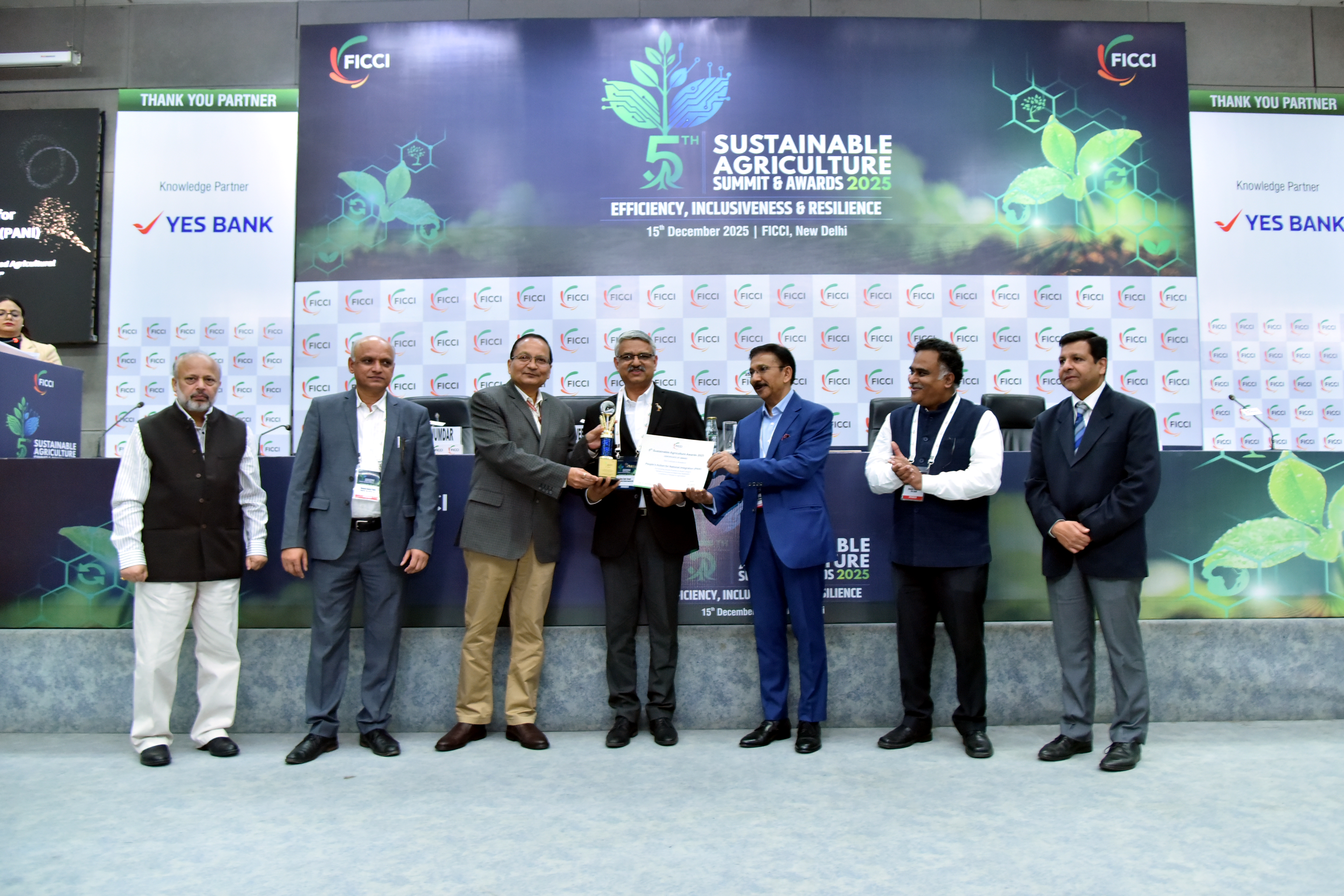
Mr Deo Datt Singh, Director-Operations at PANI, receiving the FICCI’s Sustainable Agriculture Award in New Delhi
Collaboration for Climate Collective: Weaving a Rural Resilience Ecosystem in Uttar Pradesh
On 11–12 November 2025, PANI convened a two-day workshop on ‘Collective Rural Climate Action’ at Sahabhagi Shikshan Kendra, Lucknow, bringing together over 50 civil society organisations, funders and facilitators from across Uttar Pradesh. Framed by the conviction that “tan aur man sahi hoga to dhan apne aap aa jayega,” the gathering affirmed that restoring the health of Mother Earth and the dignity of rural communities must
precede all material gains.
The workshop was rooted in PANI’s decade-long journey of centring small and marginal women farmers in districts such as Balrampur, Gonda, Shravasti and Siddharth Nagar, and in its emerging three-tier partnership model. This model connects PANI’s strategic direction and capacity-building, regional and local CSO partners’ ground-level work and a cadre of 250 Climate Warriors, women leaders from Gram Panchayats, who will bridge community realities with policy frameworks. The workshop sought to strengthen this collaborative ecosystem and co-create locally grounded climate action pathways.
Day One focused on dialogue and deep listening. CSO partners presented region-specific climate vulnerabilities: drought, erratic rainfall and groundwater stress in Bundelkhand; unseasonal rains and fragmented landholdings in Awadh; recurring floods and waterlogging in Purvanchal; soil erosion and heavy runoff in Vindhya; and still-evolving risk profiles in the Tarai. These conversations highlighted that while Uttar Pradesh shares a common climate crisis, each agro-climatic zone demands its own nuanced, community-led response, especially one that recognises women’s everyday leadership in agriculture and resource management.
Day Two shifted from diagnosis to design. With facilitation support from ClimateRise Alliance of Dasra, a long-time ecosystem builder, participants clarified roles and responsibilities of PANI, regional anchors, CSOs, funders and facilitators. Region-wise groups developed time-bound plans around model villages, training modules, monitoring structures and alliances with government departments. Funders such as Tata Trusts, Hindustan Unilever Foundation, DCM Shriram Foundation, HDFC Bank CSR and ITC CSR shared that the workshop deepened their understanding of Uttar Pradesh’s climate diversity and reaffirmed the need to support scalable, community-centred and gender-just interventions.
The workshop concluded with a shared commitment to act as a statewide climate coalition rather than isolated projects. Partners agreed to demonstrate climate-resilient practices through model villages in each region, reach at least 15,000 farmers in the coming months and nurture 20–25 field spokespersons per region to sustain climate dialogue at the grassroots. Regular online and in-person review meetings, knowledge exchanges and joint learning processes will help generate evidence that can ultimately inform policy. In this way, the workshop marked a collective promise to stand with rural communities as they navigate the climate crisis with agency, courage and hope.
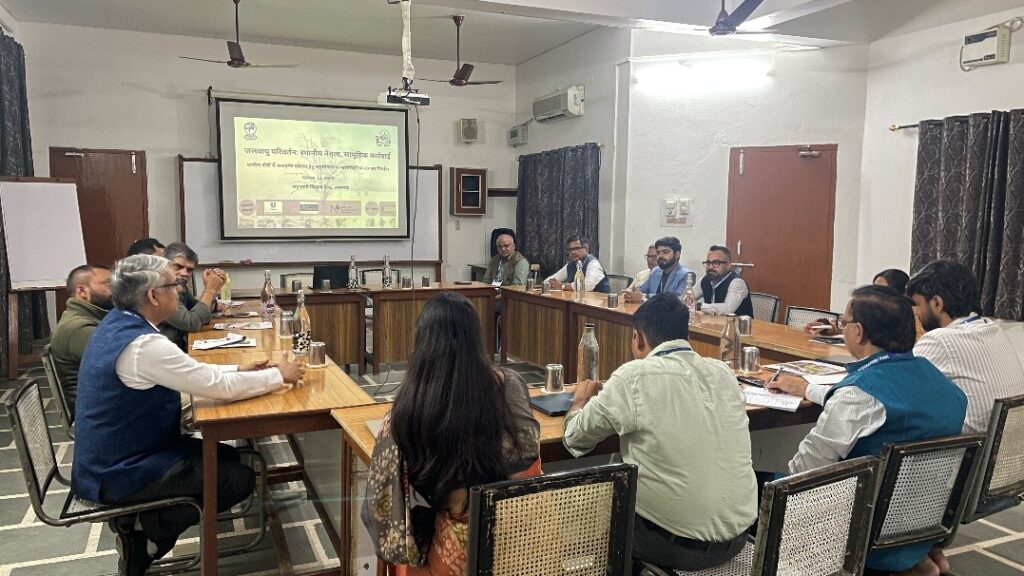
Rural Climate Collaborative – Discussions for Future Strategies with Supporting Partners
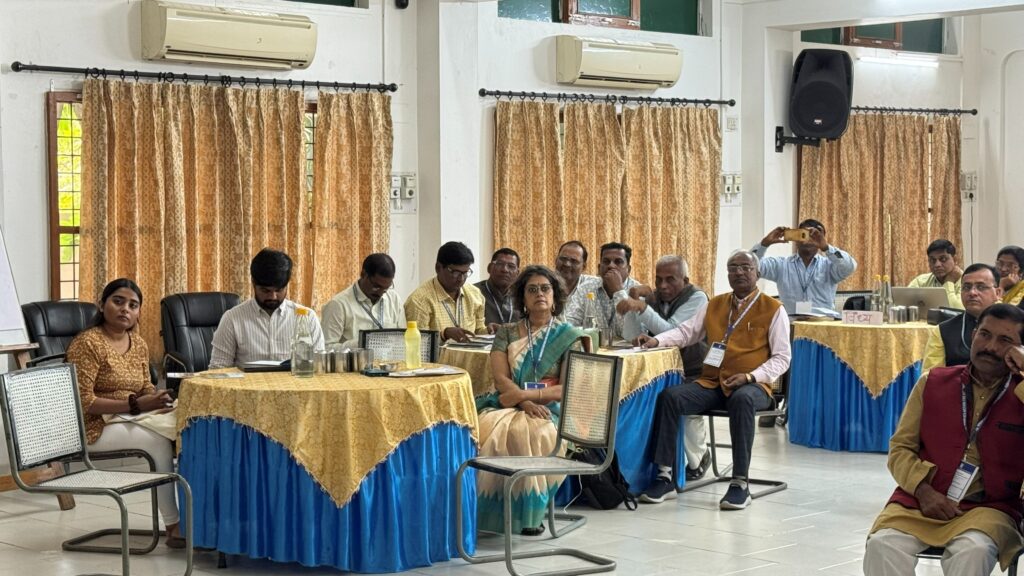
Rural CLimate COllaborative Workshop – Participant Organisations
Vision and Resources in Dialogue: PANI at IDR Hindi’s Chaupal
On 8 October 2025, PANI’s Director – Operations, Mr. Deo Datt Singh, joined IDR Hindi’s live programme Choupal for a conversation on a question that confronts many social organisations: “Vision and Funding: How to strike the right balance?” Hosted on Instagram, the dialogue created space for practitioners, young professionals and leaders to reflect on how institutions can stay true to their mission while navigating the realities of fundraising.
Drawing on PANI’s four-decade experience, Mr. Singh spoke about the importance of grounding organisational vision in people’s lived realities, and then seeking resources that strengthen, rather than dilute, this commitment. He emphasised that funding is not just about mobilising money, but about building relationships based on honesty, mutual respect and shared learning. Participants asked candid questions on donor expectations, projectisation, core support and how to communicate grassroots work without simplifying its complexity.
The conversation also highlighted the need to invest in institutional capacities, field teams and community leadership, even when such investments are not always ‘visible’ in logframes. Mr. Singh underscored that long-term social change requires patient capital, flexible support and the courage to say ‘no’ when funding does not align with core values.
PANI is grateful to IDR Hindi for curating this thoughtful space and to all those who engaged with the discussion. Conversations like these help strengthen a sector-wide ethic where vision and funding can reinforce, rather than undermine, each other.
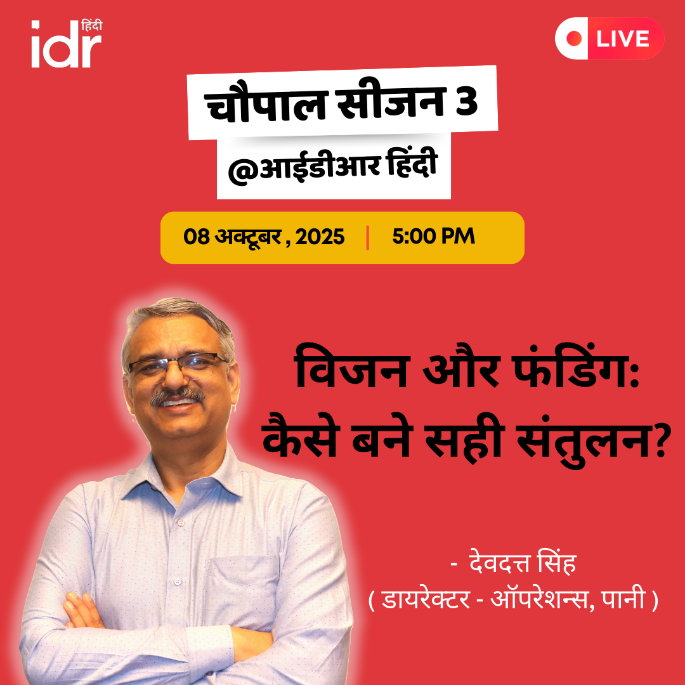
PANI’s Deo Datt Singh to talk in IDR’s Hindi Choupal
Poshan Paathshala: Recognising PANI’s Role in Strengthening Health and Nutrition Systems
The Government of Uttar Pradesh’s Poshan Paathshala e-learning series, organised by the ICDS Department and hosted on the National Informatics Centre (NIC) webcast platform, is emerging as an important space for strengthening frontline capacity on nutrition, health and early childhood development. Through these regular sessions, DPOs, CDPOs, Supervisors, Anganwadi workers and community members across the state come together to learn, reflect and improve practice.
In a recent Poshan Paathshala session on ‘The Importance of Sanitation and Hygiene in Maternal and Child Health and Nutrition’, PANI was invited to contribute as a knowledge partner. Mr. Satish Srivastava, Lead – Health and Nutrition at PANI, served as a resource person, sharing insights on how hygiene practices directly shape outcomes for pregnant women, adolescent girls and young children. The session highlighted the often-overlooked links between water, sanitation, menstrual hygiene, infection, and undernutrition, and emphasised the need to integrate these dimensions into everyday ICDS work.
This invitation reflects institutional recognition of PANI’s sustained engagement in strengthening health, nutrition and early childhood education systems in Uttar Pradesh – whether through support to Anganwadi centres, capacity building of frontline workers, or community-based behaviour change initiatives. For PANI, participation in Poshan Paathshala is both an honour and a responsibility, and an opportunity to contribute field-based learning to state systems, and to deepen collaborative efforts so that every child and every mother can access the care, nutrition and dignity they deserve.
The recorded session is available for wider viewing, allowing more practitioners and partners to engage with these critical issues and carry the conversation into their own blocks and villages.
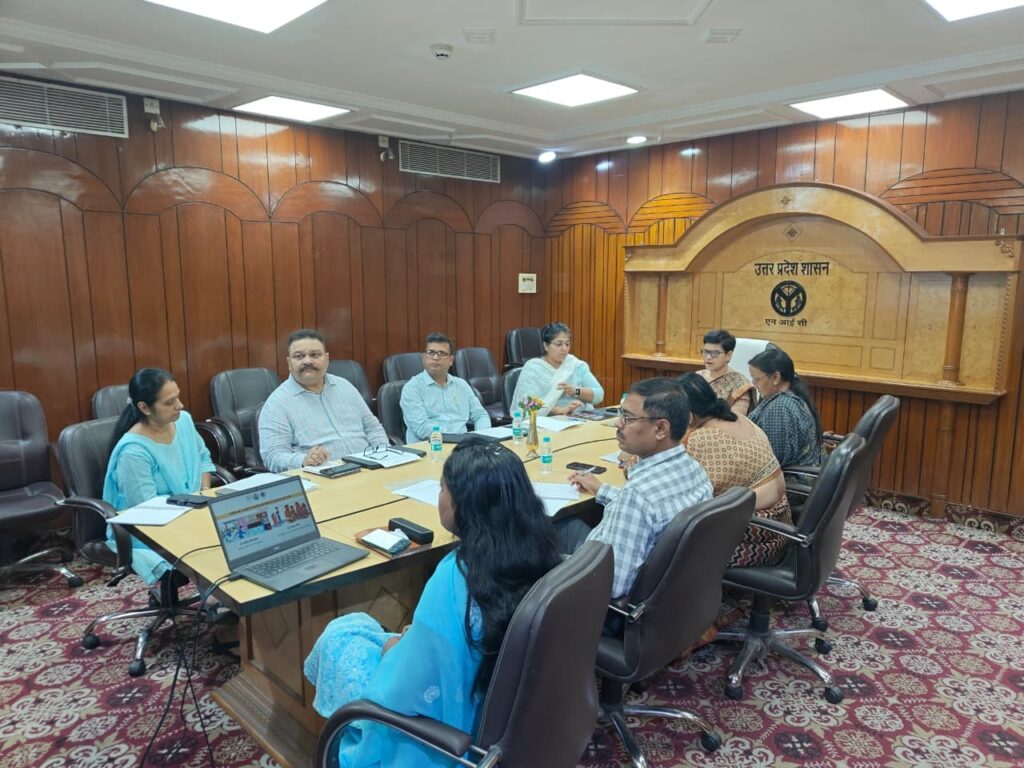
PANI’s representation in ICDS department’s POSHAN PATHSHALA Webcast
Growing Green Enterprise: Nurturing Local Agriculture Entrepreneurs in Birdpur
In Siddharthnagar’s Birdpur block, PANI’s journey of nurturing local women and youth as climate-conscious entrepreneurs is taking a concrete shape through the ACCES (Accelerating Climate and Clean Energy Solutions) project. Rather than viewing farmers only as beneficiaries, this initiative is helping them step into the role of Agriculture Entrepreneurs (AEs) – local resource persons who can anchor climate-resilient agriculture, market linkages and clean energy adoption within their own communities.
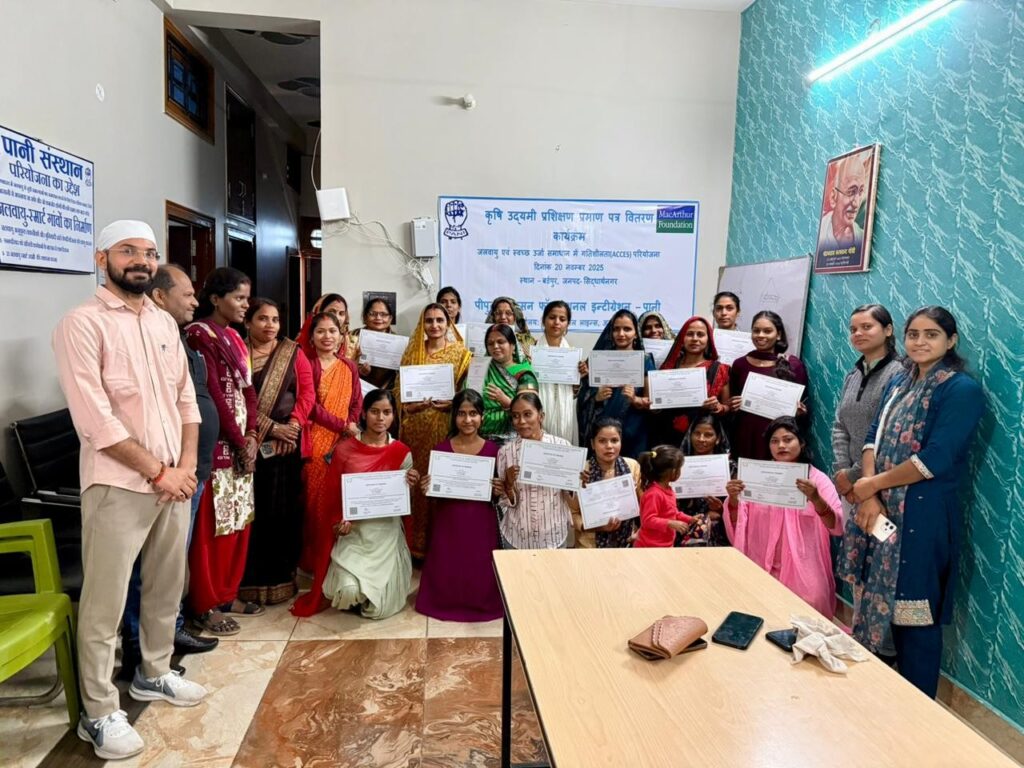
Trained Agriculture Entrepreneurs under ACCES project of PANI
Under Workstream-II of the ACCES project, the Syngenta Foundation recently completed an intensive 40-day training programme for 25 Agriculture Entrepreneurs. This was not just a technical course, but a holistic process of building knowledge, confidence and leadership. Beginning with the fundamentals of soil formation, organic farming, green manuring, NADEP composting, soil sampling and mulching, the training placed soil health and ecological balance at the centre of profitable farming. Detailed sessions on macro and micro nutrients, micro-irrigation systems and plant growth regulators further deepened participants’ understanding of how to increase productivity while conserving resources.
The curriculum recognised that today’s rural entrepreneur must be as comfortable with people and markets as with seeds and soil. Hence, modules on nursery management, integrated weed and pest management, safe use of chemicals and crop-specific agronomy (rice, maize, chilli, mushrooms) were complemented by training in communication skills, interpersonal skills, conducting farmer trainings and demonstrations, and collective marketing. Apiculture (beekeeping) was introduced as an important allied activity that supports both livelihoods and biodiversity. Basic computer literacy and marketing skills helped participants see themselves not only as farmers, but as service providers and business owners capable of planning, tracking and growing their enterprises.
For PANI, this work is central to its vision of climate-resilient rural economies led by local actors, especially women. Each trained Agriculture Entrepreneur in Birdpur represents a living node of knowledge—someone who can support neighbouring farmers, model sustainable practices, and demonstrate that climate-smart agriculture and dignified incomes can go hand in hand. The ACCES training has laid a strong foundation; the real impact will unfold as these entrepreneurs take their learning back into fields, households and village markets, sowing seeds of resilience for years to come.
Laying Strong Foundations: Strengthening Early Childhood Care and Education in Balrampur
The early years of a child’s life shape everything that follows. For children growing up in rural and marginalised contexts, the quality of early childhood care and education (ECCE) can be the difference between a life of constrained possibilities and one of confident learning. Recognising this, PANI’s BUNIYAAD (ECCE) project in Balrampur is working to transform Anganwadi centres from basic service points into vibrant, child-friendly spaces that nurture curiosity, language, social skills and emotional security.
From 7th to 10th October 2025, ECCE experts Ms. Meena Nimkar and Ms. Prachi Bogam from QUEST, Maharashtra, along with Mr. Vishwambhar from Tata Trusts, visited the model Anganwadi centres supported under the project in Rehra Bazaar, Tulsipur and Gainsari blocks of Balrampur. Their visit focused on understanding not only what activities were taking place, but how deeply children and workers were engaging with the ECCE process.
The team observed classroom routines, the creative use of teaching–learning materials and the ways in which Anganwadi workers were interacting with children. They noted children’s enthusiasm, participation and growing confidence, powerful indicators that learning is becoming joyful and meaningful rather than rote and intimidating. In many centres, simple, low-cost materials were being used in innovative ways to support pre-literacy, pre-numeracy and socio-emotional development.
In the feedback session, the experts commended the quality of work emerging from these model centres. They appreciated the commitment of Anganwadi workers to adopt child-centred practices, despite structural constraints and heavy workloads. Tata Trusts’ representative, Mr. Vishwambhar, encouraged the team by affirming that the programme is moving in the right direction and that ‘excellent work’ is underway on the ground. He highlighted how heartening it was to see the confidence, ownership and dedication with which the local team and frontline workers are fulfilling their responsibilities.
Interventions like BUNIYAAD are critical at this moment. By investing in the earliest years, building the capacities of Anganwadi workers and demonstrating what quality ECCE can look like in government systems, the project is helping to ensure that children in Balrampur enter school not with fear, but with readiness, joy and a strong foundation for future learning.
Holding Space for Young Minds: World Mental Health Day in Tarun Block
On World Mental Health Day, PANI’s Youth Mental Health Program marked an important milestone in Tarun block by bringing diverse community stakeholders together for a focused discussion (goshti) on the mental health of adolescents and young people. This was the first time that youth mental health was addressed collectively at the block level with such a wide circle of actors.
The programme team convened representatives from Panchayati Raj Institutions, teachers, health workers, police, media, frontline workers, family members and young people themselves. The aim was not just to ‘celebrate’ the day, but to build a shared understanding of the growing mental health challenges faced by youth, and to reflect honestly on the roles and responsibilities each stakeholder holds.
Through guided discussion, participants explored issues such as stigma, academic pressure, suicidal thoughts, relationship stress and the burden of unrealistic expectations on young minds. Many acknowledged that while these challenges are visible in everyday life, they are rarely named openly, and even less frequently addressed with care and sensitivity. The session created a safe space to begin breaking the silence and to recognise that mental health is as real and important as physical health.
The core objectives of the event were three-fold – to sensitise community stakeholders to the realities of youth mental health, to share PANI’s ongoing programme efforts, and to discuss how families, institutions and service systems can work together to support young people before a crisis emerges. By the end of the goshti, these objectives were visibly met. Stakeholders articulated concrete ways in which they could contribute – from creating more listening spaces in schools and villages, to reducing harmful responses rooted in blame and shame, to linking at-risk youth with timely care.
For PANI, this World Mental Health Day reaffirmed that youth mental health is our shared responsibility. The Tarun block dialogue is a beginning. And it is about laying the foundation for a more compassionate, informed and coordinated response so that every young person can grow, learn and dream.
Girls in Their Power: Celebrating the International Day of the Girl Child Across PANI
Every year on 11 October, the International Day of the Girl Child calls the world to recognise girls’ rights and the unique challenges they face, from discrimination and child marriage to unequal access to education and healthcare. It is also a day to honour their leadership, resilience and potential as change-makers in families, communities and public life. For PANI, this day is not just a symbolic observance, but an affirmation of its long-term commitment to gender equality and the dignity of every girl.
This year, programmes across PANI marked the day through village-level meetings, school events and campaigns that placed adolescent girls at the centre. In Karwi (Chitrakoot), a special programme brought together more than 750 adolescent girls along with school principals, Gram Pradhans, ASHA didis and Anganwadi workers. The event was inaugurated by Ms. Puja Sahu, SDM Karwi, Mr. Mahendra Patel, CDPO, and the Mission Shakti team, signalling that the rights and aspirations of girls are a matter of serious public concern, not a “women’s issue” alone.
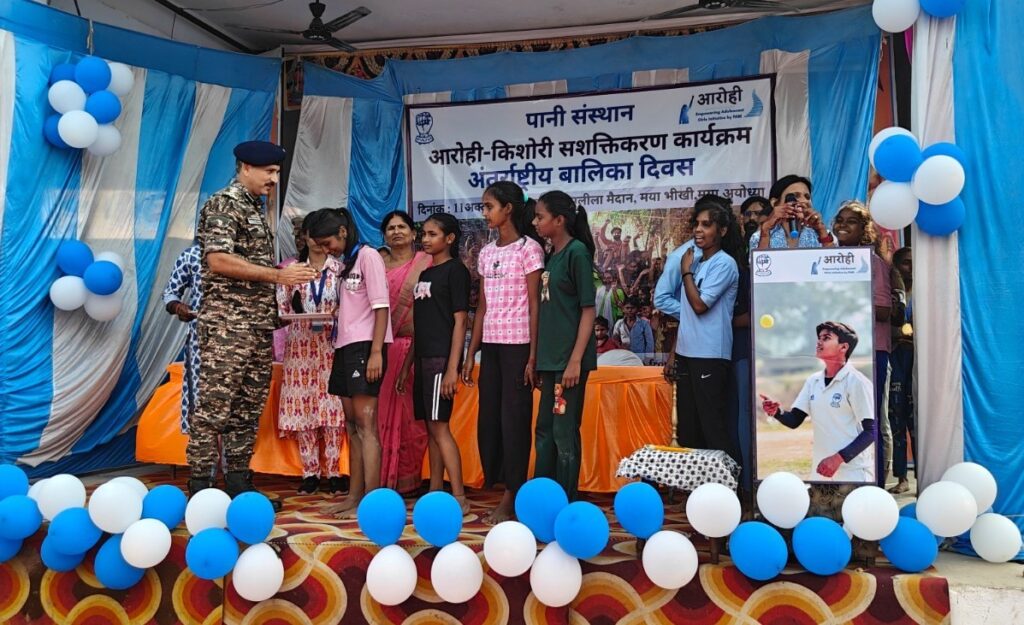
Bharat Bhushan, Founder Secretary, PANI
Through dance, songs, role plays and speeches, girls spoke about their dreams and the barriers they navigate—early marriage, unsafe public spaces, restrictive norms and unequal opportunities. Their performances were not just cultural items, but powerful statements of confidence and agency. In listening to them, community members were invited to reflect on how homes, schools and institutions can either limit girls’ futures or help them flourish.
Across PANI’s work, this day served as a reminder that investing in girls’ safety, education and leadership is an investment in a more just and peaceful society. The celebrations concluded with a shared commitment from officials, frontline workers and community leaders to stand with girls so that they can grow, learn and lead on their own terms—not just on one day in the year, but every day.
SAMANATA Fellowship: Nurturing Grassroots Leaders for Constitutional Justice
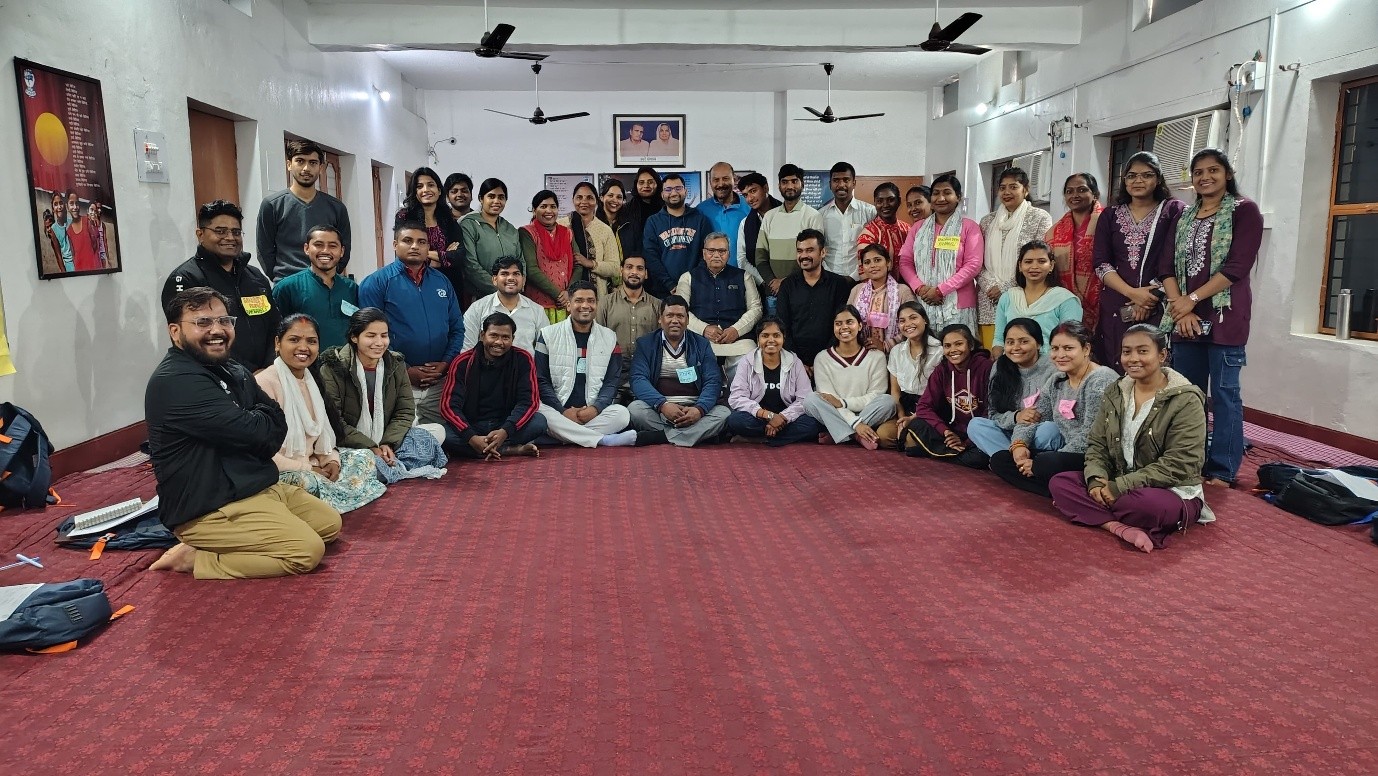
Orientation of SAMANATA Fellows of PANI
In September 2025, PANI launched the SAMANATA Fellowship – a three-year journey to nurture a new cadre of grounded, value-driven community leaders. SAMANATA stands for Social Action and Mobilization to Advance National Transformative Aspirations and is rooted in the conviction that lasting change in India’s villages must be led by local youth who see their communities not as sites of charity, but as spaces of rights, dignity and constitutional promise.
The fellowship will support 110 young leaders across 15 districts of Bundelkhand and Awadh between 2025 and 2028. Each fellow will work intensively with five Gram Panchayats, engaging with communities on some of the most entrenched challenges of our times such as caste- and gender-based discrimination, denial of rights and entitlements, weak local self-governance and everyday injustices that often go unnamed. Throughout this process, the Constitution will be their compass, guiding how they listen, mobilise and act.
Fellows will be responsible for assessing local needs, preparing community action plans, organising and strengthening collectives, and facilitating dialogue between communities and key stakeholders. They will also document processes and changes, generating local evidence of what it takes to build peace, inclusion and equity from the ground up. Each fellow will be mentored by a regional coordinator and the programme team, and will receive a modest monthly fellowship honorarium to support their full-time engagement.
At this stage, PANI has successfully hired the fellows, and initiated the five-day rigorous training in each region. SAMANATA is an invitation to walk a demanding but meaningful path of public service. Through this fellowship, PANI hopes to help shape a generation of leaders who can hold together courage, compassion and constitutional values in their everyday work with communities.
Karyakarta Sammelan: Celebrating the People Who Carry PANI’s Work Forward
As PANI completes four decades of working alongside rural communities, the organisation has launched a new initiative to honour the strength at its core, the karyakartas who stand with people every day in villages, fields and institutions. The Karyakarta Sammelan series has been conceived as a space to pause, reconnect and celebrate those who hold PANI’s values in their daily work.
Instead of a single central event, the Sammelan is being organised in a decentralised, region-wise format so that more colleagues can participate without leaving their field responsibilities for long periods. Each gathering is designed not as a formal review meeting, but as a space for joy, reflection and solidarity, where teams can see one another not only as professionals, but as whole people with talents, aspirations and stories.
The first Sammelan in Balrampur, followed by the second in Gonda set a warm and inspiring tone. Team members from different projects came together for a day filled with sports, informal games and a talent show that showcased music, poetry and creative performances. Laughter, playful competition and heartfelt conversations replaced the usual rush of deadlines and reports. The energy in the room was infectious, reminding everyone that collective care and camaraderie are essential to sustaining long-term social change.
PANI extends deep appreciation to the Balrampur and Gonda teams and all colleagues who helped make this Sammelan a success. The experience has reinforced that when karyakartas feel seen, valued and connected, they return to their work with renewed commitment and hope.
Strengthening Climate Action Partnerships: Gates Foundation Visit to PANI’s Lucknow Office
As part of the monthly review of the Carbon Kisan Connect (CKC) initiative, PANI’s Lucknow office hosted Mr. Steven Prager from the Gates Foundation, along with representatives from KPMG India. Mr. Prager, who oversees the Foundation’s global carbon and climate adaptation portfolio, engaged in an in-depth discussion with the CKC team and PANI’s senior leadership.
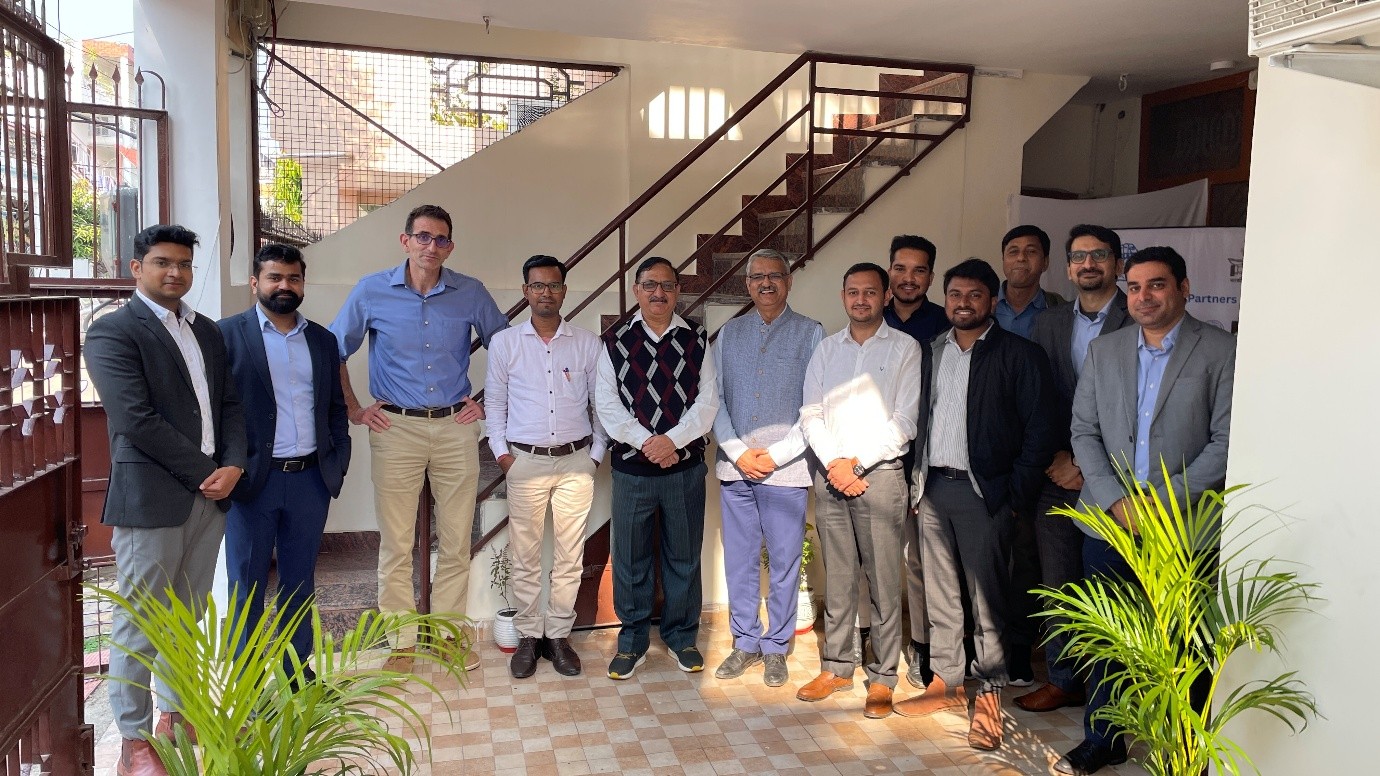
Steven from Gates Foundation along with PANI and KPMG team for Carbon Kisan Connect project
The visit provided an important opportunity to review the progress of CKC, which is working to connect smallholder farmers with emerging carbon and climate-resilient agriculture opportunities. The team shared field experiences, early learnings and the practical challenges of building farmer-centric carbon interventions that are both environmentally robust and socially just.
Mr. Prager and the KPMG India team offered constructive feedback on programme design, monitoring approaches and future scaling pathways. Together, the discussion explored how CKC can strengthen data systems, deepen farmer participation, and ensure that climate benefits translate into tangible gains for rural communities.
For PANI, the visit reaffirmed the value of collaborative, learning-oriented partnerships in addressing the climate crisis. The interaction with Gates Foundation and KPMG India strengthens a shared commitment to developing models of climate action that are rooted in local realities and led by farming communities themselves.