
 of
15 villages of Mandhata block.In this block the
Government education system was observed to
be very poor due to lack of adequate
infrastructure, hygiene facilities, learning
material and lack of interest of teachers.
This
resulted in low attendance and high rates of
student dropouts. Moreover, due to non-
functional toilets and urinal facilities, children, especially girls were not interested to go to schools.
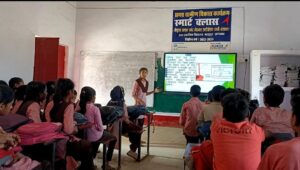
Then HRDP and PANI jointly initiated an idea to promote an effective education system through the
conversion of upper primary traditional schools into the SMART Schools which includes five
components of development such as: digital classroom, library setup, science laboratory, clean drinking
water facility, and renovation of sanitation units. The support of desk and bench was also provided for
sitting arrangement of children in classroom. All these facilities became very supportive for children to
improve their learning level according to their standard. School teachers are conducting the teaching
sessions with children in a very interesting and joyful environment by using Smart class set up in school.
Children are learning new things in easy way through use of audio- visuals on screen.Total 518 children
of 6 th -8 th class of 3 upper primary schools have been benefitted with this intervention. This effort of the
Organization is appreciated by the officials of block level education department and school teachers.
of
15 villages of Mandhata block.In this block the
Government education system was observed to
be very poor due to lack of adequate
infrastructure, hygiene facilities, learning
material and lack of interest of teachers.
This
resulted in low attendance and high rates of
student dropouts. Moreover, due to non-
functional toilets and urinal facilities, children, especially girls were not interested to go to schools.
Then HRDP and PANI jointly initiated an idea to promote an effective education system through the
conversion of upper primary traditional schools into the SMART Schools which includes five
components of development such as: digital classroom, library setup, science laboratory, clean drinking
water facility, and renovation of sanitation units. The support of desk and bench was also provided for
sitting arrangement of children in classroom. All these facilities became very supportive for children to
improve their learning level according to their standard. School teachers are conducting the teaching
sessions with children in a very interesting and joyful environment by using Smart class set up in school.
Children are learning new things in easy way through use of audio- visuals on screen.Total 518 children
of 6 th -8 th class of 3 upper primary schools have been benefitted with this intervention. This effort of the
Organization is appreciated by the officials of block level education department and school teachers. - Education for girls is a challenge in the region as most of the schools are far from the
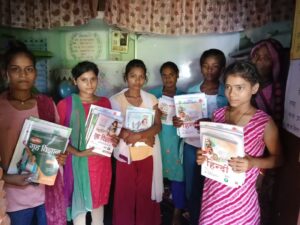 native places of the
girls and parents were not keen to send their
daughters to far off schools as they were not
serious for educating the girls. Moreover, girls
who belonged to poor and marginal families
lacked financial resources to pay school fee,
hence dropped out of schools. PANI met with
parents of the girls and counselled them to
enroll their daughters in schools by sharing the
significance and benefits of education among
their children. We shared success stories of girls
from other regions, highlighting the courage with which girls in other backward regions are taking care of
their safety and still carrying on with education. PANI also met other stakeholders, such as teachers, PRI members, and community influencers, to persuade these girls to start their education again. Based on
consistent efforts, PANI re-enrolled 645 school drop-out adolescent girls in schools and colleges. We also
provided for school fees and books to all the adolescent girls to share the burden of their education with
parents.
native places of the
girls and parents were not keen to send their
daughters to far off schools as they were not
serious for educating the girls. Moreover, girls
who belonged to poor and marginal families
lacked financial resources to pay school fee,
hence dropped out of schools. PANI met with
parents of the girls and counselled them to
enroll their daughters in schools by sharing the
significance and benefits of education among
their children. We shared success stories of girls
from other regions, highlighting the courage with which girls in other backward regions are taking care of
their safety and still carrying on with education. PANI also met other stakeholders, such as teachers, PRI members, and community influencers, to persuade these girls to start their education again. Based on
consistent efforts, PANI re-enrolled 645 school drop-out adolescent girls in schools and colleges. We also
provided for school fees and books to all the adolescent girls to share the burden of their education with
parents. 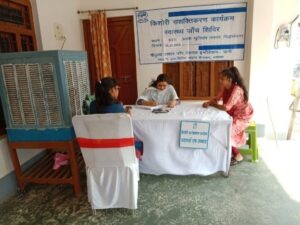 Under another initiative, over past three months’ number of health camps were organized across all
three target districts
covering over 1,098 girls focusing on
reproductive health check-up. At this camp, their Blood
pressure and hemoglobin tests were conducted and
reports were generated there and then for further
consultation with the Gynecologists. Cases which required
deeper diagnosis were referred to the hospitals for further
check-up.
Under another initiative, over past three months’ number of health camps were organized across all
three target districts
covering over 1,098 girls focusing on
reproductive health check-up. At this camp, their Blood
pressure and hemoglobin tests were conducted and
reports were generated there and then for further
consultation with the Gynecologists. Cases which required
deeper diagnosis were referred to the hospitals for further
check-up.
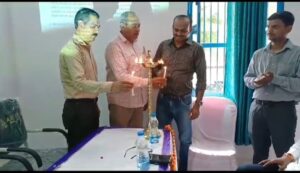 The aim of the project is to
provide access to clean drinking
Water, Sanitation and Hygiene
(WASH) resources to
marginalized communities, with a
focus on women and adolescent
girls, and raise awareness around
sanitation to promote behavior
change. The project will run for 8
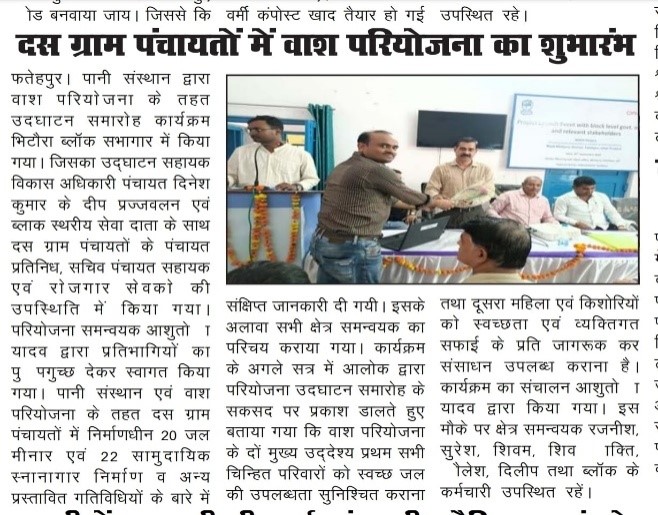
months (July 2023-February 2024) across 10 Gram panchayats of Fatehpur district. By the end of the
project, it aims to setup solar energy-run water tanks (20 with capacity of 5,000 liters each),22
community bathrooms, 30 sanitary napkin depots, 5 garbage management structures in each GP, to
ensure access to portable drinking water and sanitation resources in community. The project will help
over 1,500 households (150 HHs from each GP) get access to sanitation resources. The project will
ensure that Village Health, Sanitation & Nutrition Committee (VHSNC) is established to take a lead in
incorporating WASH components in the annual GPDP (Gram Panchayat Development Plan). The
inaugural event was attended by many block level officials. Mr. Pradeep Kumar, the Block Development
Officer at Bhitaura block was the Chief Guest at the event accompanied by Mr. Dinesh Kumar– ADO,
Panchayat who appreciated PANI team’s efforts in this direction and promised to extend their full co-
operation for smooth implementation of the project. They also requested all block level stakeholders to
co-operate with PANI, as required.
The aim of the project is to
provide access to clean drinking
Water, Sanitation and Hygiene
(WASH) resources to
marginalized communities, with a
focus on women and adolescent
girls, and raise awareness around
sanitation to promote behavior
change. The project will run for 8
months (July 2023-February 2024) across 10 Gram panchayats of Fatehpur district. By the end of the
project, it aims to setup solar energy-run water tanks (20 with capacity of 5,000 liters each),22
community bathrooms, 30 sanitary napkin depots, 5 garbage management structures in each GP, to
ensure access to portable drinking water and sanitation resources in community. The project will help
over 1,500 households (150 HHs from each GP) get access to sanitation resources. The project will
ensure that Village Health, Sanitation & Nutrition Committee (VHSNC) is established to take a lead in
incorporating WASH components in the annual GPDP (Gram Panchayat Development Plan). The
inaugural event was attended by many block level officials. Mr. Pradeep Kumar, the Block Development
Officer at Bhitaura block was the Chief Guest at the event accompanied by Mr. Dinesh Kumar– ADO,
Panchayat who appreciated PANI team’s efforts in this direction and promised to extend their full co-
operation for smooth implementation of the project. They also requested all block level stakeholders to
co-operate with PANI, as required. 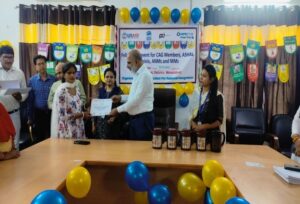 Under the Core Group Project Partners(CGPP)
Moradabad, a long-term polio eradication program is
being conducted by PANI. Under the project one of
the objectives is to give the first vaccine of Pentaxim
to the children of 12-24 months of age, which protects
against 5 deadly diseases (diphtheria, tetanus,
pertussis, poliomyelitis, and Haemophilus influenzae
type b (Hib). The project team comprises Mobilization
Mitra, ASHA workers, ANMs, Asha Sangini and
Aanganwadi workers. On 26 th July 2023, PANI hosted a
Felicitation Ceremony for recognizing the efforts of
Mobilization Mitra, Asha Sangini, ANM, Keg Member, Youth Member, CHO, Aanganwadi workers who
are responsible for vaccination of children in High Priority sub-center. Over 98 percent of the children
have been vaccinated in their allocated regions. An appreciation letter was given by the Chief Guest, Chief
Medical Officer, Dr. Kuldeep Singh along with mementos and he also motivated the team for keeping up
the noble work of timely vaccination of children.
Under the Core Group Project Partners(CGPP)
Moradabad, a long-term polio eradication program is
being conducted by PANI. Under the project one of
the objectives is to give the first vaccine of Pentaxim
to the children of 12-24 months of age, which protects
against 5 deadly diseases (diphtheria, tetanus,
pertussis, poliomyelitis, and Haemophilus influenzae
type b (Hib). The project team comprises Mobilization
Mitra, ASHA workers, ANMs, Asha Sangini and
Aanganwadi workers. On 26 th July 2023, PANI hosted a
Felicitation Ceremony for recognizing the efforts of
Mobilization Mitra, Asha Sangini, ANM, Keg Member, Youth Member, CHO, Aanganwadi workers who
are responsible for vaccination of children in High Priority sub-center. Over 98 percent of the children
have been vaccinated in their allocated regions. An appreciation letter was given by the Chief Guest, Chief
Medical Officer, Dr. Kuldeep Singh along with mementos and he also motivated the team for keeping up
the noble work of timely vaccination of children. NITI AAYOG or The National Institution for Transforming India, has partnered
with ITC for providing technical support to improve productivity of agriculture and allied sectors in the
27 districts around the country.
 ITC has engaged People's Action for National Integration (PANI) as its
local partner in Sonbhadra district. The project runs in close collaboration with the district
administration and ITC to build capacities of relevant government extension staff to create a cohort of
master trainers at block level to cascade specific Package of Practices (PoPs) and templates for seasonal
planning practices to the Gram Panchayat level. On 22nd September 2023, under the supervision of Mr.
Jai Prakash, Deputy Agriculture
Director, a one-day district level
workshop on Cascade
Internalization was organized in
the auditorium of Agriculture Department, Magurahi in Sonbhadra, in the presence of Agriculture
Development Block staff. The training was imparted to 17 master trainers around four key components –
Component 1: Knowledge empowerment around Package of Practices for paddy (DSR, SRI etc.) and
natural farming; Component 2: Natural Resource Management which included Micro-irrigation – DRIP,
rain gun, mini-sprinklers, farm ponds etc.; Component 3: Institutional support to spread awareness
around government entitlements and subsidies to support agriculture; Component 4: Livelihood
promotion through animal husbandry, fish pond etc. The workshop was attended by 61 participants
including district, block and GP level administrative staff. Based on this training, master trainers will
further train and disseminate the knowledge and training modules to 85 Village level Resource
Persons(VRPs) to reach out to over 100,000 farmers by end of October 2023 and train them on
aforementioned components.
ITC has engaged People's Action for National Integration (PANI) as its
local partner in Sonbhadra district. The project runs in close collaboration with the district
administration and ITC to build capacities of relevant government extension staff to create a cohort of
master trainers at block level to cascade specific Package of Practices (PoPs) and templates for seasonal
planning practices to the Gram Panchayat level. On 22nd September 2023, under the supervision of Mr.
Jai Prakash, Deputy Agriculture
Director, a one-day district level
workshop on Cascade
Internalization was organized in
the auditorium of Agriculture Department, Magurahi in Sonbhadra, in the presence of Agriculture
Development Block staff. The training was imparted to 17 master trainers around four key components –
Component 1: Knowledge empowerment around Package of Practices for paddy (DSR, SRI etc.) and
natural farming; Component 2: Natural Resource Management which included Micro-irrigation – DRIP,
rain gun, mini-sprinklers, farm ponds etc.; Component 3: Institutional support to spread awareness
around government entitlements and subsidies to support agriculture; Component 4: Livelihood
promotion through animal husbandry, fish pond etc. The workshop was attended by 61 participants
including district, block and GP level administrative staff. Based on this training, master trainers will
further train and disseminate the knowledge and training modules to 85 Village level Resource
Persons(VRPs) to reach out to over 100,000 farmers by end of October 2023 and train them on
aforementioned components.
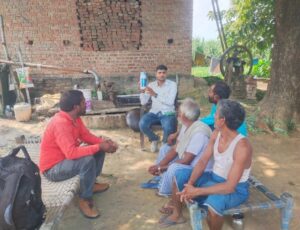 PANI hosted an interactive demonstration
and training session with farmers in Chandauli hub Uttar Pradesh state on 7th October 2023 by an
expert representative of a pesticide organization with an objective of spreading awareness around safe
usage of pesticides. During the session he shared best practices, do and don’ts while using pesticides,
and care to be taken before and after spraying and protected spray on field.
In same district, another training session was conducted with an objective of increasing productivity and
profitability of farmers on sustainable basis through relevant latest technological interventions in the
prevailing rice–wheat cropping system.
PANI hosted an interactive demonstration
and training session with farmers in Chandauli hub Uttar Pradesh state on 7th October 2023 by an
expert representative of a pesticide organization with an objective of spreading awareness around safe
usage of pesticides. During the session he shared best practices, do and don’ts while using pesticides,
and care to be taken before and after spraying and protected spray on field.
In same district, another training session was conducted with an objective of increasing productivity and
profitability of farmers on sustainable basis through relevant latest technological interventions in the
prevailing rice–wheat cropping system.
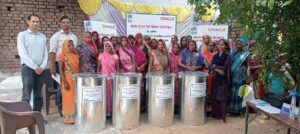 The AFSN project is being
implemented by PANI in total
25 gram panchayats of
Manikpur district, Chitrakoot
block, Uttar Pradesh. Through
the project, a total of 3750
families are being worked for
better food security and
nutrition. In last quarter, we
undertook following
initiatives:
The AFSN project is being
implemented by PANI in total
25 gram panchayats of
Manikpur district, Chitrakoot
block, Uttar Pradesh. Through
the project, a total of 3750
families are being worked for
better food security and
nutrition. In last quarter, we
undertook following
initiatives:
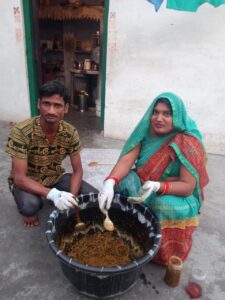 Embrace the inner entrepreneur in you and give it your best: Alka Maurya’s inspiring journey of becoming an exemplary entrepreneur under the DWLL project began in Peernagar village, part of the Amlauli Gram Panchayat.
She was a dedicated housewife, and her family relied mainly on agricultural activities largely carried out by her husband for their livelihood. Alka, at the age of 33, held a Bachelor of Arts degree. She used to actively support her husband in agriculture while also taking care of their daughters (10 and 5 years old). As per her, PANI team played a crucial role in her success story. The team provided specialized training to Alka in pickle making under the flagship project of Democratizing Water for Livelihood and Life through Women (DWLL). Alka gained the required skills and knowledge needed to prepare a variety of delicious pickles. Empowered by her newfound expertise, Alka took a bold step by investing INR 10,000 to start her small pickle-making business. Today, she takes pride in producing three unique pickle varieties, with support of her husband in her business to sell her pickles and is able to earn a monthly income in the range of INR 30K-45K and a consistent profit ranging between INR 9K-15K. Her remarkable success is a testament to her unwavering dedication and the opportunities shown by PANI team coupled with comprehensive training programs, which included leadership development, business plan preparation, and trade-specific training for pickle making and sale of output. Alka’s journey exemplifies how determination, skill enhancement and the awareness around right opportunities can empower individuals to break free from traditional occupation and thrive as successful entrepreneurs to bring sustained positive impact in their lives.
Embrace the inner entrepreneur in you and give it your best: Alka Maurya’s inspiring journey of becoming an exemplary entrepreneur under the DWLL project began in Peernagar village, part of the Amlauli Gram Panchayat.
She was a dedicated housewife, and her family relied mainly on agricultural activities largely carried out by her husband for their livelihood. Alka, at the age of 33, held a Bachelor of Arts degree. She used to actively support her husband in agriculture while also taking care of their daughters (10 and 5 years old). As per her, PANI team played a crucial role in her success story. The team provided specialized training to Alka in pickle making under the flagship project of Democratizing Water for Livelihood and Life through Women (DWLL). Alka gained the required skills and knowledge needed to prepare a variety of delicious pickles. Empowered by her newfound expertise, Alka took a bold step by investing INR 10,000 to start her small pickle-making business. Today, she takes pride in producing three unique pickle varieties, with support of her husband in her business to sell her pickles and is able to earn a monthly income in the range of INR 30K-45K and a consistent profit ranging between INR 9K-15K. Her remarkable success is a testament to her unwavering dedication and the opportunities shown by PANI team coupled with comprehensive training programs, which included leadership development, business plan preparation, and trade-specific training for pickle making and sale of output. Alka’s journey exemplifies how determination, skill enhancement and the awareness around right opportunities can empower individuals to break free from traditional occupation and thrive as successful entrepreneurs to bring sustained positive impact in their lives.
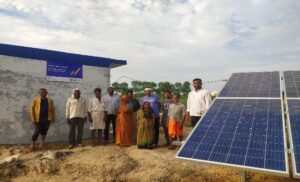 Solar irrigation: where nature and technology meet: The successful completion of the HRIDAY project in August 2023 across 5 villages of Kakori block in Lucknow in UP is a significant milestone in the journey towards the holistic approach in rural development. The project started in July 2021 engaging with 1,513 poorest families focused especially on women through intervention on livelihood enhancement, healthcare, water & sanitation, school & Aanganwadi infrastructure development and Natural resource management through integrated
approach. In one of the villages named Manbhauna, the farmers were struggling with issue of irrigation as tube wells were very far-off from fields and although the soil is suitable for many types of crops, farmers were only cultivating a few vegetables and that too facing lot of crop losses due to lack of irrigation facilities. PANI has set-up one solar energy-based Group Irrigation Unit (GIU) that has resolved the issue of irrigation of more than 40 farmers to cultivate an area of over 50-acres land. Many farmers now have started growing flowers, wheat, paddy and different types of vegetables round the year. Needless to say, this has led to increased income of farmers which has consequently improved their socio-economic conditions.
Solar irrigation: where nature and technology meet: The successful completion of the HRIDAY project in August 2023 across 5 villages of Kakori block in Lucknow in UP is a significant milestone in the journey towards the holistic approach in rural development. The project started in July 2021 engaging with 1,513 poorest families focused especially on women through intervention on livelihood enhancement, healthcare, water & sanitation, school & Aanganwadi infrastructure development and Natural resource management through integrated
approach. In one of the villages named Manbhauna, the farmers were struggling with issue of irrigation as tube wells were very far-off from fields and although the soil is suitable for many types of crops, farmers were only cultivating a few vegetables and that too facing lot of crop losses due to lack of irrigation facilities. PANI has set-up one solar energy-based Group Irrigation Unit (GIU) that has resolved the issue of irrigation of more than 40 farmers to cultivate an area of over 50-acres land. Many farmers now have started growing flowers, wheat, paddy and different types of vegetables round the year. Needless to say, this has led to increased income of farmers which has consequently improved their socio-economic conditions.
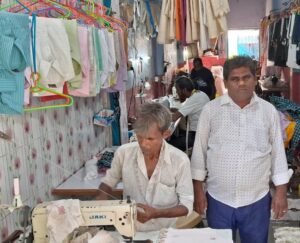
Harnessing the Sun to power our lives: PANI is implementing a project “Building resilience to climate change through government schemes” in Siddharthnagar district of Uttar Pradesh which aims to spread awareness among farmers around climate change risks, causes and effects as well as support them to be linked to various renewable sources of energy through government entitlements/ schemes to build resilience against climatic disasters and reducing harmful effects on climate.
One such case is of Surya Prakash Prajapati who is a tailor by occupation and a native of Khesraha block of Siddharthnagar. He was struggling with high costs incurred due to 12 hours of sewing machines running in his tailoring shop each day. Long-time power cuts were further a big challenge for his business to sustain. He was using diesel-run generators for a long time which was further a huge cut on his income amounting to expenses of INR 1500-INR 2000 per day for diesel costs as well as was very hazardous for environment. After PANI’s orientation and support around off-grid solar panels, it proved to be a boon for his business. He got a solar panel (amounting to INR 7.5 lakhs) installed on the terrace of his tailoring shop on monthly instalments. Now, he is able to cut off his expenses on electricity and diesel to almost negligible and efficiency of his workers has improved due to availability of electricity for extended number of hours. Earlier, his monthly income was only up to INR 20,000; but now his income is INR 30,000-40,000 per month.
Another similar case is of Sunil Chaudhary, a native of Mithwal block in Siddharthnagar who owns a flour and oil mill. His 20-year old flour mill business was completely dependent on diesel-run generators. His diesel expenses were INR 1,500-2,000 per day which was a huge cut from his monthly income. After getting support from PANI’s BCCRE project team, Sunil got Solar-based Flour mill which reduced his daily expenses on diesel and consequently increased his monthly income. Before installing solar chakki, his monthly income was around INR 20,000-INR 21,000 which rose to INR 30,000-INR 40,000 post installing solar-based chakki. His solar chakki is one of its kind in the village and is now inspiring many other micro-entrepreneurs in the region to leverage the solar power for their business.
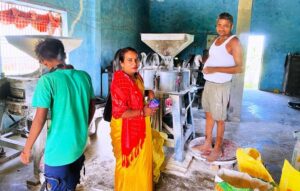 Another similar case is of Sunil Chaudhary, a native of Mithwal block in Siddharthnagar who owns a flour and oil mill. His 20-year old flour mill business was completely dependent on diesel-run generators. His diesel expenses were INR 1,500-2,000 per day which was a huge cut from his monthly income. After getting support from PANI’s BCCRE project team, Sunil got Solar-based Flour mill which reduced his daily expenses on diesel and consequently increased his monthly income. Before installing solar chakki, his monthly income was around INR 20,000-INR 21,000 which rose to INR 30,000-INR 40,000 post installing solar-based chakki. His solar chakki is one of its kind in the village and is now inspiring many other micro-entrepreneurs in the region to leverage the solar power for their business
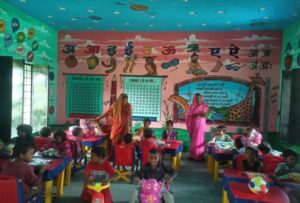
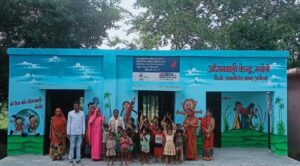
An early childhood education is the key to energizing the child’s natural desire to learn: Aanganwadi Centers (AWCs) play a vital role in addressing fundamental child learning and health needs for the poor, as well as childhood care and education in India’s rural regions. In one of the backward blocks named Amaniganj of Ayodhya district, PANI assessed the need to upgrade the infrastructure of Aanganwadi centers (AWCs)as we observed that the AWC in this region was almost vacant with only 8-10 children sitting each time whenever we visited them.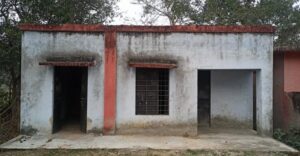 As visible from adjacent pictures, the AWC building was dilapidated. There was no adequate infrastructure, toilet facilities or play areas for children. Under the project HRDP Ayodhya, implemented by PANI Sansthan and supported by HDFC CSR PARIVARTAN, we initiated the idea to upgrade the AWC’s infrastructure in Amaniganj to attract the children’s attention through Building as Learning Aid (BALA) painting and Teaching/Learning Materials (TLM).10 AWCs were earmarked for revamp and renovation. Post renovation, the exterior view of the building attracts children to go to the AWCs. The teaching and learning materials help children to use their mental ability which will help in their problem-solving and management skills. PANI counselled parents and Aanganwadi sevika/ sahayika of the region to make them aware of significance of early education and how this builds the foundation of a child’s desire to keep learning and growing. As a result, sevikas also got motivated to teach and work hard as well as footfall of children started increasing and reached 40-50 children daily coming to AWC. This upgraded AWC has become an example for other education centers too. So far, over 440 children have benefitted from this Learn and Go initiative. Government administrative officials have also appreciated PANI’s work in the block and have adopted similar upgradation for other AWCs in the region.
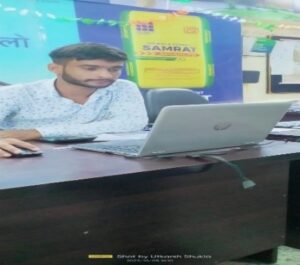 Empowerment starts with education: PANI’s flagship project Agarwal Gyan Kendra (AGK) solely supported by Hiralal Agarwal Foundation (USA), provides critical skills and vocational education to promising individuals (or students) that truly have the motivation and desire to improve their personal capabilities, but lack the financial resources needed to do so. Through AGK, many young men and women undergo certificate courses in office management, accounting and computer skills and get successfully placed in corporate and social sector to earn a decent livelihood. One such story is of a Young man named Utkarsh Shukla from Ayodhya district who underwent 6-months’ Office Assistant Training program from April 2023-September 2023 and has been placed as Assistant Accountant at M.P. Birla cement at an annual package of INR 2,16,000. Not only Utkarsh but AGK has till date upskilled over 3,500 students and made sustained impact in their lives and livelihoods.
Continuing to empower women to be the next change makers: Rural ChangeMakers (RCM), a dream program of PANI is a certificate program in block – Tarun, District Ayodhya which started with 25 selected Adolescent Girls. Under this program, PANI team build their capacity around various aspects such as, Gender, Human Rights, Local Governance/Democracy, Social Inclusion, Environment/Climate Change, Water security, Livelihood, Nutrition & Food security, Community Mobilization and WASH. By this program PANI is creating a cadre of social workers to contribute in rural construction.
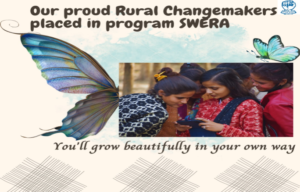 Now, 16 out of 25 Rural ChangeMakers are selected in various programs implemented by PANI in different blocks of the district. Recently 3 RCMs got opportunity to work in district Balrampur, of Uttar Pradesh as a Field Coordinator from September 2023 at an annual package of INR 240,000. They are financially independent and also contributing to family income. They have truly become heroes to inspire many girls in the district.
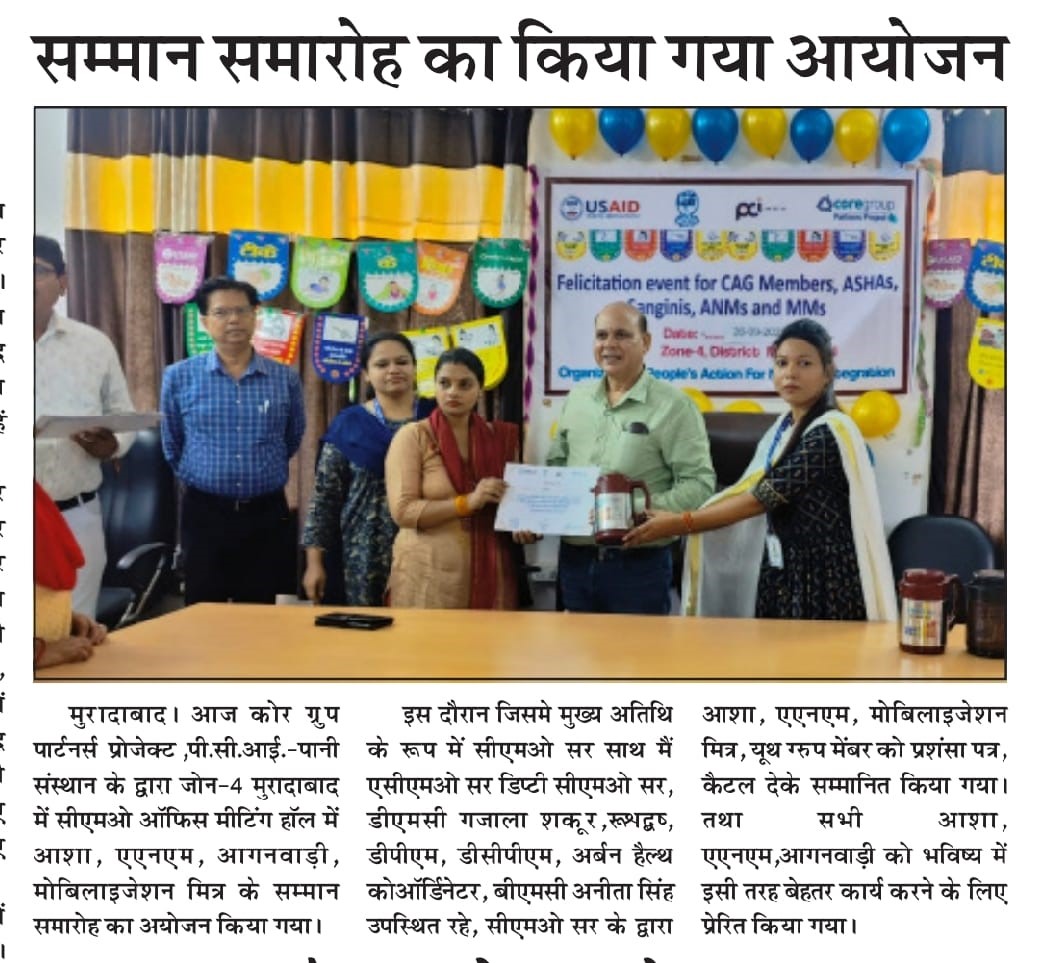
Felicitation of ANMs and Mobilization Mitra in Polio Project in Moradabad