

Spandan: The Pulse of PANI
A Quarterly Bulletin Jul-Sep 2025
Honouring Our Roots on People’s Action Day – August 5
On August 5, PANI came together to observe People’s Action Day, a moment of collective remembrance and renewed commitment on the twenty-fifth anniversary of our founder Shri Paras Bhai’s passing. From the banks of the Sarayu to the fields in different geographies of India, his vision of People’s Action for National Integration has guided every step of our journey since 1986. Today, his belief that “women are the pivot of development and change” still pulses through our work in health, livelihoods, resource management and everything that we at PANI do.
The morning began in different locations with sharing and reflections, lighting a diya in Paras Bhai’s memory, reading excerpts from his writings and sharing stories of his tireless walks through villages where he taught that true leadership springs from empathy, humility and deep respect for lived realities. We remembered how he transformed social discord in Ayodhya into a platform for dialogue, and how his Gandhian principles shaped our earliest interventions.
As the Sun climbed higher, teams gathered in small circles for “value dialogues”, exploring how Paras Bhai’s words on social harmony and self-governance speak to today’s challenges – from climate-sensitive agriculture to youth mental health. Senior members recounted moments when villagers took ownership of their self-development – an embodiment of Paras Bhai’s conviction that change must emerge from the ground up.
In these conversations, we found a fresh resolve – to walk the path he charted, to serve with dedication and to build leadership that truly listens and stands with the most marginalized. As seeds of monsoon-soaked fields prepare to sprout new life, our collective promise on People’s Action Day takes root: to uphold the legacy of Shri Paras Bhai and continue nurturing communities with compassion, justice and unwavering hope.
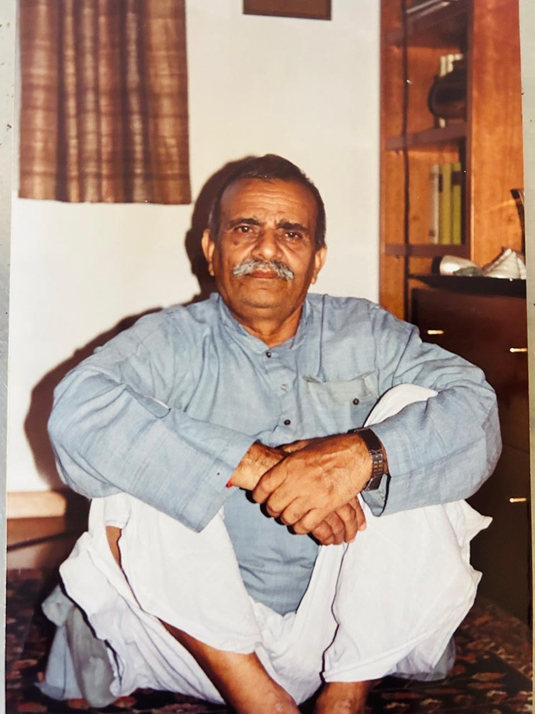
Parash Bhai (24 April 1924 – 5 August 2000)
Launch of 150 Abhayam (ni-dar) Krishi Kendra: Where Gender Equity Meets Agricultural Resilience
In India’s agrarian landscape, where small and marginal farmers account for nearly 86% of agricultural households, the challenges are not just of low productivity but of limited access – access to timely inputs, affordable machinery, accurate advice and reliable markets. Rising input costs, water scarcity, declining soil health and the uncertainties of climate change have placed additional burdens on these farmers, particularly in resource-poor regions like eastern Uttar Pradesh.
While agriculture remains a family occupation in these regions, women carry a disproportionate share of responsibilities – managing farms, livestock and food security – yet they are often excluded from decision-making roles in markets, cooperatives and farm enterprises. The potential of women to lead community-based agri-enterprises, provide last-mile services and strengthen local economies remains largely untapped.
Recognizing these gaps, PANI, under the PRUSKAR project supported by the Hindustan Unilever Foundation (HUF), in collaboration with local farming communities, has launched the Abhayam Krishi Kendra (AKK) initiative – a practical, ground-up response to the pressing needs of smallholder farmers.
Abhayam Krishi Kendra: A Practical One-Stop Solution
The Abhayam Krishi Kendras (AKKs) are designed to serve as integrated agricultural service centres, led by trained women agri-entrepreneurs from within the community. These centres aim to provide:
- Quality agricultural inputs such as seeds (vegetables, cereals, pulses, fodder) and bio-fertilizers.
- Organic solutions including vermicompost and eco-friendly crop protection materials.
- Nursery development support, enabling farmers to raise their own seedlings.
- Soil and water testing, empowering farmers to make data-driven crop and input choices.
- Rental services of farm machinery, reducing cost and labour for small farmers.
- Animal feed for better livestock health and integrated farming.
- Expert agri-advisory and market linkages, helping farmers improve productivity and secure better prices.
Each AKK covers two Gram Panchayats, supporting over 400 farmers and is run by a local woman entrepreneur who has completed a 40-day certified training and secured necessary licensing. This decentralized model brings essential agricultural services closer to farmers’ fields, saving them time, cost and travel to distant market towns.
Growing Scale and Reach
The initiative has witnessed remarkable growth in a short time. As of September 2025:
- 150 Abhayam Krishi Kendras have been established across Gonda and Shravasti districts.
- The first batch of 70 AKKs was inaugurated on 5th April 2025, and another 80 women agri-entrepreneurs have recently completed their certification, with their centres inaugurated in a group on 8th August 2025.
- 16 of these centres are located in Ikauna block of Shravasti, while the rest are operational across various blocks in Gonda district.
Why This Matters
Abhayam Krishi Kendras are not just service delivery points. They represent a shift in how rural agricultural ecosystems function:
- Farmers gain direct access to inputs and services without middlemen.
- Women step into leadership roles as agri-entrepreneurs and trusted advisors in their communities.
- The farming system moves towards climate-smart and resource-efficient practices, with water conservation and sustainable input use at its core.
- The local economy benefits through the circulation of income within the community, rather than it flowing outward to distant suppliers and traders.
The Road Ahead
This initiative is an ongoing journey of learning and scaling. As these centres stabilize, the next steps include:
- Strengthening supply chains through partnerships with Farmer Producer Organizations (FPOs) and government schemes.
- Enhancing farmers’ market access beyond the village level.
- Facilitating peer-to-peer learning networks among women agri-entrepreneurs to share experiences and solutions.
A Powerful Change
In rural Uttar Pradesh, where access to a single reliable seed or advice at the right time can change a farmer’s season, the Abhayam Krishi Kendras are already making a difference. They work as enablers – bridging gaps in knowledge, services and markets – while fostering a new generation of women-led rural enterprises.
The journey has only begun, but the foundations of a more resilient, inclusive and farmer-led agricultural system are being laid.
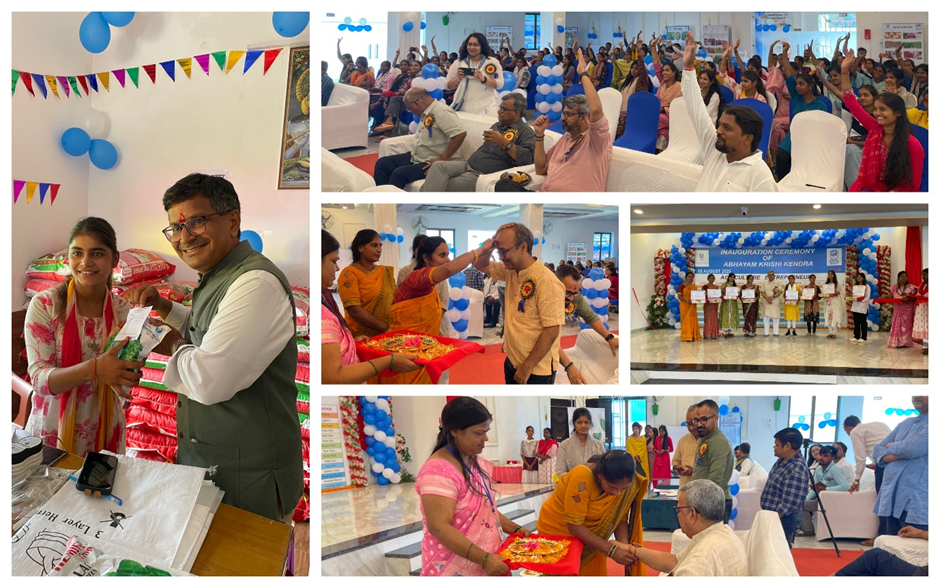
Launch of 80 New Abhayam Krishi Kendra in Gonda
World Water Week (24 to 28 August)
Amplifying Voices for Groundwater Resilience: PANI’s World Water Week Podcast with Dr. Shraman Jha
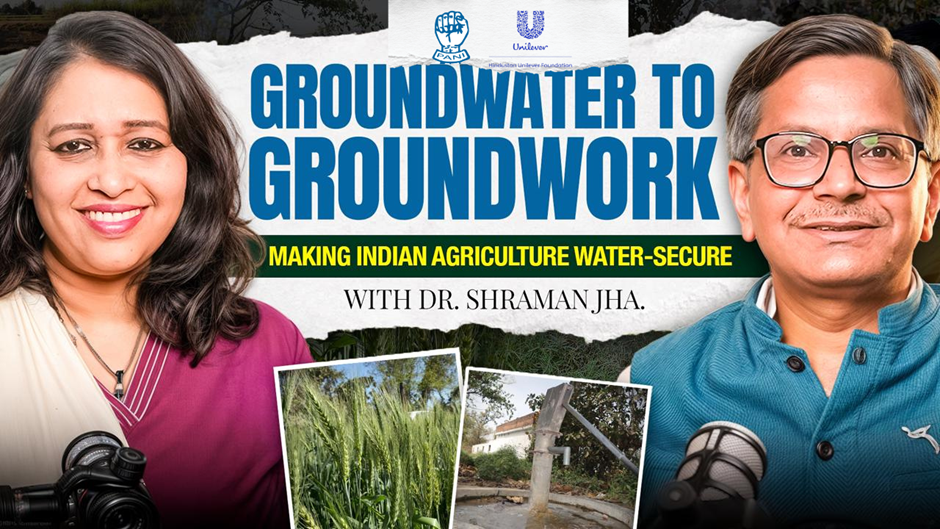
Link to the podcast: https://www.youtube.com/watch?v=heoIPObkUXM
This quarter, PANI marked World Water Week by hosting a pivotal podcast conversation with Dr. Shraman Jha, CEO of Hindustan Unilever Foundation (HUF). Groundwater depletion ranks among the most urgent challenges in Indian agriculture – particularly in Eastern Uttar Pradesh, where millions of farming households rely on steadily falling water tables for their livelihoods. Through this 60-minute dialogue, PANI and HUF underscored the power of purposeful leadership, women-led community action, and science-backed behaviour change in forging a sustainable path to water security.
Dr. Jha opened by reflecting on his transition from corporate leadership to becoming a “water evangelist”. He recounted how his early exposure to rural development projects illuminated a simple truth: technical fixes alone cannot reverse groundwater decline. Instead, durable solutions flow from equipping local communities, especially women, with the knowledge, agency and organizational support needed to transform how water is valued and used in agriculture.
Central to the discussion was the role of women Community Resource Persons (CRPs). These women are catalysts for change in their villages, drawing on insights from behaviour-change science to introduce practices such as alternate wetting and drying in rice cultivation, zero-budget natural farming, and crop diversification to reduce water demand. Dr. Jha and PANI’s team have collaborated to train and mentor CRPs, fostering peer networks where women share successes, troubleshoot setbacks, and inspire broader adoption of water-smart techniques.
A key takeaway was the inextricable link between rural water security and urban well-being. As Dr. Jha explained, aquifers do not observe administrative boundaries: groundwater mismanagement in villages can ripple outward, affecting water availability in towns and cities. Engaging urban audiences, from consumers to policymakers, becomes essential. Listeners learned how everyday urban water choices and advocacy for watershed restoration can bolster resilience far beyond city limits.
The conversation also looked ahead to emerging challenges: erratic monsoons, groundwater contamination, and increasing pressure on scarce resources from a growing population. Dr. Jha and PANI’s leaders agreed that digital tools and data systems, such as real-time groundwater monitoring and mobile dashboards for CRPs, can enhance community responsiveness and accountability. Yet technology must be guided by local insights and co-created with farmers to ensure relevance and sustainability.
As the podcast concluded, Dr. Jha issued a rallying call: achieving lasting groundwater resilience demands collaboration across sectors. Corporations, civil society, government, and communities must unite around shared goals, pooling expertise, funding, and political will. PANI’s partnership with HUF exemplifies this collective spirit, demonstrating that when community voices lead and alliances broaden, transformative change is within reach.
This World Water Week update celebrates not just a conversation, but a commitment, to elevate women’s leadership, to bridge rural-urban divides, and to chart a realistic, community-driven course toward water security. We invite our readers to tune in, share insights, and join PANI in deepening these vital dialogues on sustainable agriculture and equitable rural development.
NCD Event 5 Sept in Lucknow
Building Collective Action: PANI Convenes Stakeholder Consultation on Addressing the Growing Non-Communicable Diseases (NCD) Challenge in Rural India
A timely gathering
On September 5, 2025, PANI brought together 26 diverse stakeholders in Lucknow, for a Round Table Consultation on “Tackling NCDs in Rural Areas: Social Determinants and the Role of Civil Society.” The gathering included representatives from NGOs, INGOs, government health bodies, academia, CSR initiatives, philanthropic organizations and frontline workers – united by a shared concern about a public health challenge that is quietly reshaping the health landscape of rural India.
A silent epidemic taking root
The timing of this consultation could not be more critical. Non-communicable diseases – diabetes, hypertension, cardiovascular conditions, and chronic respiratory illnesses now account for nearly 60% of all deaths in India, with rural areas witnessing a steady and alarming rise. In Uttar Pradesh, the gap between urban and rural prevalence is narrowing rapidly. What was once considered an urban, lifestyle-related problem has now firmly taken root in villages across the state. Yet unlike infectious diseases, NCDs develop silently, often going undetected until they result in emergencies, disabilities, or premature deaths. The World Bank reports that 40% of NCD-related household expenditure in India is financed through borrowing or selling assets, pushing vulnerable families deeper into poverty.
PANI’s own population-based survey in Mall block, Lucknow, confirmed what frontline workers have been observing: 21% of respondents reported being diagnosed with hypertension, with an additional 8% found hypertensive during screening. Risk factors were widespread – 53% used tobacco daily, 33% consumed alcohol, and 63% did not eat fruits even once a week. Most concerning, only 16% had been screened for NCDs by ASHAs in the past three months, revealing significant gaps in detection and prevention at the grassroots level.
PANI’s Response – The NIDAN Initiative
In response to this urgent need, PANI launched NIDAN (Non-Communicable Diseases Initiative for Detection, Awareness, and Nurturing), a pilot project in select Gram Panchayats of Mall block, Lucknow district. NIDAN strengthens frontline health systems by training ASHAs and Community Health Officers in screening and referral, while driving behaviour change through Mahila Mandals, and community wellness activities. Aligned with government guidelines, the initiative is designed to develop replicable practices that can be integrated into existing public health systems.
Why Collective Action Matters
PANI recognizes that no single organization can address a challenge this complex. NCDs are deeply intertwined with social norms, economic realities, environmental factors, and system capacities. Isolated interventions, no matter how well-designed, cannot achieve the scale of impact needed. This is precisely why the Round Table Consultation was necessary at this point in time – to move beyond siloed approaches and build shared understanding, collective strategies, and coordinated action across the development and health ecosystem. The consultation was aimed at enhancing organizational learning, strengthening strategies, and maximizing collective contributions in addressing this pressing health challenges in rural India.
Listening, Learning and Charting a Better Future Together
The consultation opened with addresses by PANI leadership, followed by keynote presentations from Dr. Anurag Singh and Dr. Shiva Manvatkar of Swasthya Gram Society on social determinants of NCDs, and Dr. Swaroop N. of KHPT on field insights from implementing NCD interventions. But the heart of the gathering lay in the extended round table discussion, where participants openly shared field experiences and unpacked the layered realities driving NCDs in rural communities.
What emerged was a candid portrait of communities caught in a health transition they neither sought nor fully understand. Participants discussed how sedentary lifestyles are becoming common as mechanization reduces physical work, how junk food is now easily accessible yet nutrition education remains absent, and how widespread myths and misconceptions shape health-seeking behaviour. Fear of lifelong medication, reliance on unqualified practitioners, pervasive tobacco and alcohol use, social stigma around certain conditions, mobility and financial barriers faced by women, adolescent vulnerability due to changing diets and stress, and misinformation spread via social media – all these factors compound the challenge.
From these reflections, stakeholders identified grounded pathways forward: opportunistic OPD-based screening to integrate detection into existing workflows, ASHA support packages with training and incentives, locally relevant behaviour change communication co-created with communities, youth and school engagement for intergenerational change, micro-data collection for local planning, ensuring affordable care pathways, ensuring continuum of care and scaling up integrated models that address physical, mental, and social health together.
The Beginning of an Ongoing Conversation
The consultation was not designed to produce definitive solutions, but to initiate an ongoing conversation. By taking the lead in convening this dialogue, PANI has signalled its commitment to tackling NCDs not in isolation, but through collaborative action. As the organization continues to pilot and refine NIDAN, the insights and partnerships forged through this consultation will be invaluable in shaping strategies that are grounded in community realities, reinforce frontline systems, and build the sustained, collective effort this silent epidemic demands.
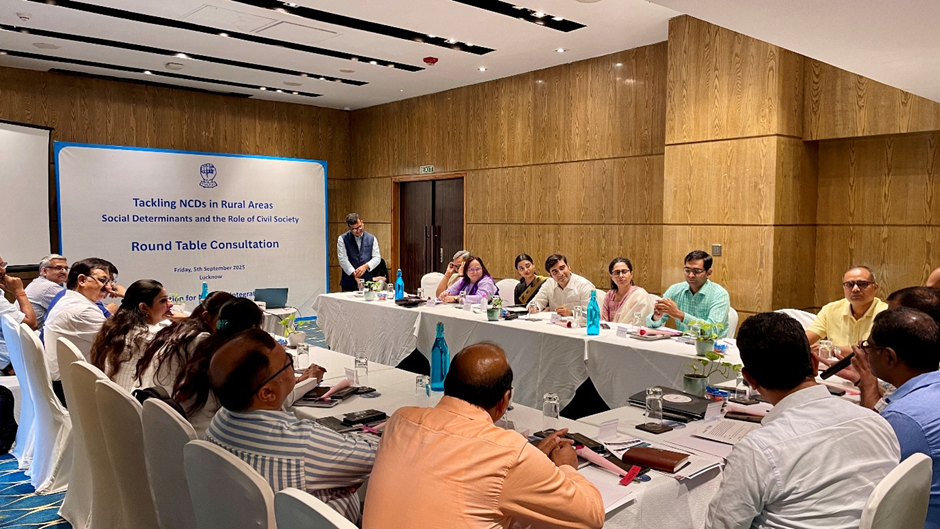
Round Table Consultation on Tackling NCDs in Rural Areas in Lucknow
EAG 2.0 Launch in Tarun
Celebrating Nine Years of Transformation: Launch of EAG 2.0 in Tarun
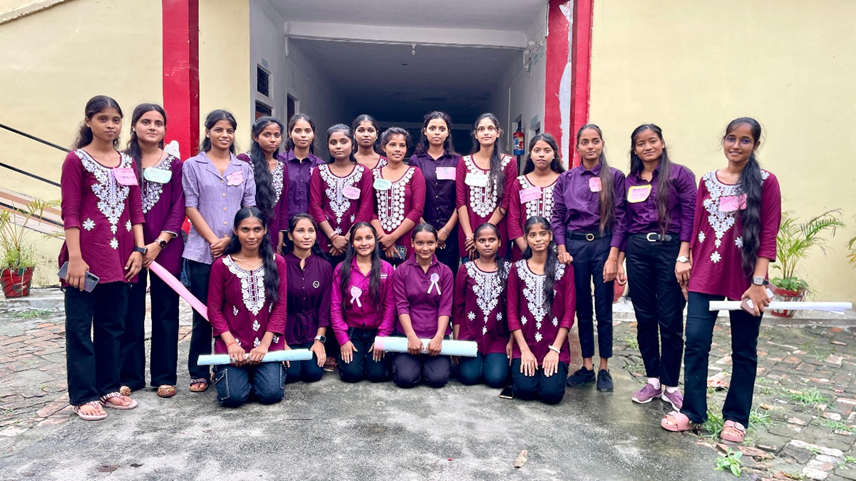
Adolescent Girls leading the EAG 2.0
Empowering Adolescent Girls (EAG) in Tarun block, Ayodhya, has completed a remarkable nine-year journey of nurturing leadership, strengthening communities and transforming lives. Since its inception in 2015, PANI’s community-owned, peer-led model reached over thousands of adolescent girls across Tarun, delivering holistic support in education, health, nutrition and rights through Resource Centres in 97-gram panchayats. From re-enrolling 857 out-of-school girls to reducing anaemia rates by over 50%, EAG’s integrated four-pillar approach has catalysed sustained change and paved pathways to economic independence.
This quarter marks the launch of EAG 2.0, the sustainability phase wherein the program’s torch passes to the young women who once flourished within it. Former Kishori leaders have formed a girl-led community-based organization (CBO) that will steer the program forward. Twenty core peer leaders set strategic vision and governance, while 97 associate leaders serve as champions in every gram panchayat. Together, these alumnae-turned-community-builders will anchor EAG in local ownership, ensuring that decision-making, priorities and resource mobilization remain in the hands of the girls themselves.
Over the next three years, PANI will stand alongside the CBO as a strategic partner – strengthening skills in organizational management, refining systems and processes and facilitating linkages with governmental schemes. This collaborative stewardship model will empower the CBO to operate autonomously, while guaranteeing that future cohorts of adolescent girls have safe spaces, mentorship networks, and digital literacy platforms for deeper engagement.
EAG 2.0 embodies a shift from program delivery to community stewardship. These young women will now drive action on issues they know best, from combating malnutrition and early marriage to championing STEM education and economic opportunity. Their leadership will create an environment where every adolescent girl in Tarun can grow stronger and dream bigger. As PANI transitions to a supportive role, the legacy of nine years of collective effort sets a powerful precedent: when girls lead, communities thrive.
When Dreams Take the Stage: EAG Fellows Shine at Uttar Pradesh Vidhan Sabha
On the morning of August 15, as India celebrated its 79th Independence Day, the grand forecourt of the Uttar Pradesh Vidhan Sabha in Lucknow came alive with the rhythmic grace of Badhava Folk Dance. Before an audience that included the Honourable Governor and the Chief Minister, four adolescent girls from rural Ayodhya performed with poise, precision, and pride. To the gathered dignitaries and onlookers, it was a celebration of traditional art forms—a reminder of Uttar Pradesh’s rich cultural heritage. But for those who know their journey, it was something far more profound: a testament to perseverance, aspiration, and the transformative power of steadfast support.
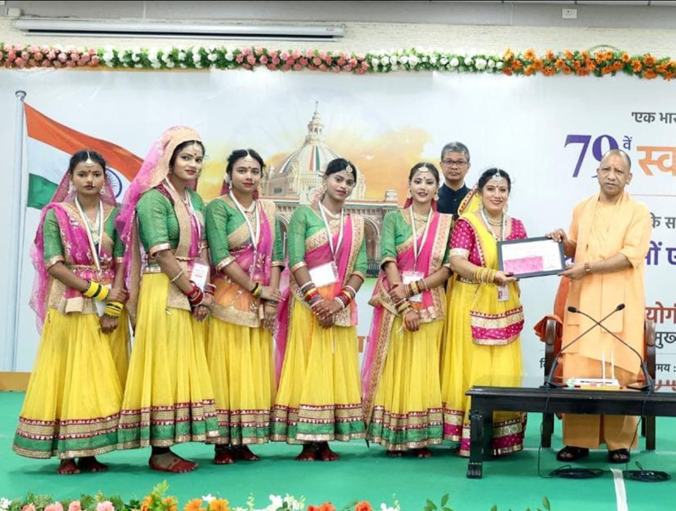
A Journey Measured in Kilometers and Conviction
These four young performers are Fellows in PANI’s Empowering Adolescent Girls (EAG) program, an initiative designed to support talented and ambitious girls from low-income, marginalized households in rural Uttar Pradesh. Each girl chose dance as the passion she wanted to pursue – not because it was expected, but because it was her own. Over ten months, they travelled fifty kilometers each time they went for practice: twenty by bicycle across village roads, followed by thirty by bus through towns and highways. Twelve days a month, they made this journey. Through monsoon rains and summer heat. Through fatigue and family responsibilities. Through moments of doubt and days of determination.
What sustained them was not just their love for dance, but the knowledge that someone believed in their dreams. The EAG Fellowship provided more than financial assistance – it offered validation, mentorship, and a community that recognized their potential even when the world around them did not.
Redefining What Is Possible
For girls growing up in rural Ayodhya, opportunities to pursue artistic or professional aspirations remain scarce. Social norms often limit mobility, discourage ambitions beyond household roles, and leave talents unexplored. PANI’s EAG program challenges these limitations by creating pathways for adolescent girls to envision futures shaped by their own choices. The fellowship supports education, skill development, leadership training, and, crucially, pursuits that nurture identity and self-worth -whether in dance, sports, academics, or vocational skills.
The girls who performed at the Vidhan Sabha have become quiet leaders in their own communities. Younger girls now see them and ask: If they can do it, why not me? Families are beginning to reconsider what is appropriate or possible for their daughters. And the girls themselves have gained something invaluable: confidence born from having honoured a commitment to themselves.
Our Ongoing Commitment
At PANI, we understand that empowerment is not a one-time event but an ongoing process – one that requires patience, trust, and consistent presence. As we continue to support youth in their journeys toward realizing their aspirations, we remain guided by a simple belief: when young people are given space to dream and the support to act on those dreams, they don’t just transform their own lives – they quietly reshape the communities around them.
This Independence Day performance was not just a moment of cultural pride. It was a reminder that freedom, in its truest sense, begins when a young girl believes she has the right to pursue what she loves – and finds a community willing to walk beside her, every step of the way.
World Breastfeeding Week
Celebrating World Breastfeeding Week: Strengthening First Bonds
This World Breastfeeding Week, we at PANI renewed our commitment to ensuring every newborn receives the nourishment and nurturing they deserve. Breastfeeding is far more than a source of nutrition – it lays the groundwork for cognitive development and fosters the earliest emotional connection between mother and child.
The Challenge
Despite its proven benefits, timely initiation of breastfeeding remains distressingly low. National Family Health Survey-5 reports show only 42 percent of newborns nationwide and just 24 percent in Uttar Pradesh – are breastfed within the first hour of life. Exclusive breastfeeding for the first six months stands at 64 percent nationally and 60 percent in Uttar Pradesh, masking barriers such as maternal undernutrition, postnatal fatigue, gaps in counselling, and prevailing social norms.
PANI’s Community-Led Approach
In Siddharth Nagar and Balrampur, our Nutrition Project Team works hand in hand with pregnant and lactating women, families, community leaders, and frontline workers. Through home visits, group counselling sessions, and community forums, we build mothers’ confidence, strengthen local support systems, and reinforce trust in simple, life-saving practices.
Why It Matters
When women receive accurate information at the right moment and find supportive environments around them, lasting change follows. Breastfeeding is a natural act—but in contexts where health systems and social support are stretched, it demands intentional effort and collective action.
At PANI, we remain steadfast in our resolve: to equip every mother with clear guidance, timely assistance, and a caring community that stands with her through every step of her breastfeeding journey.
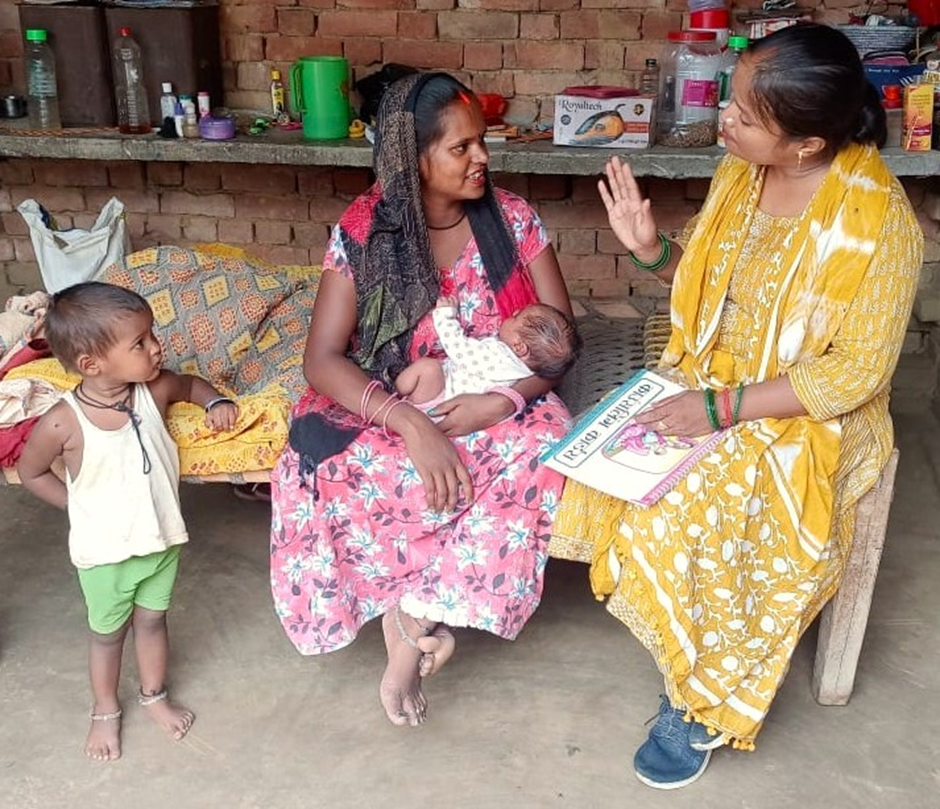
Counselling sessions with mother during breastfeeding week
Introducing the Samanta Fellowship
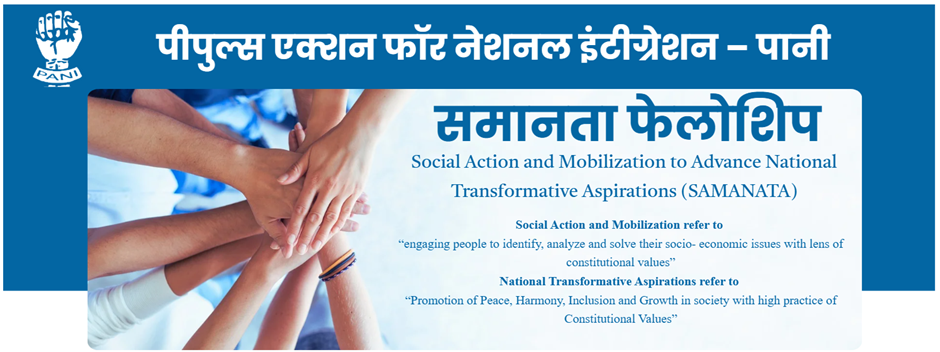
We are pleased to announce the launch of the SAMANATA (Social Action and Mobilization to Advance National Transformative Aspirations) Fellowship, a new initiative at PANI that began in September 2025. This fellowship represents an important step in our commitment to nurturing thoughtful, community-engaged leaders who can contribute meaningfully to positive change at the grassroots level.
About the Fellowship
The SAMANATA Fellowship brings together young individuals who are interested in exploring questions of social values, equality and community development. Through this program, fellows engage in meaningful conversations around local governance, civic values and their role in building more inclusive communities. The fellowship creates a space for reflection, learning and dialogue among participants who share a commitment to understanding and addressing challenges within their communities.
This initiative strengthens PANI’s ongoing work in rural development and community empowerment. By investing in young leaders who are already connected to their communities or demonstrate genuine commitment to social causes, the Samanta Fellowship extends PANI’s efforts to build sustainable, locally-led solutions. The program recognizes that lasting development emerges when individuals within communities are equipped with deeper understanding of social structures, civic frameworks and their capacity to influence positive change in their own neighbourhoods.
The fellowship complements PANI’s broader approach to development work – one that centres on dialogue, understanding diverse perspectives and supporting communities in identifying and addressing their own priorities.