


At the Threshold of 40 Years
As PANI steps into 2026, it does so with a sense of gratitude, reflection and renewed purpose, standing at the threshold of a remarkable forty-year journey rooted in service, social justice and faith in the strength of rural communities. In his New Year message, PANI’s Chief Functionary Shri Bharat Bhushan Ji recalls that PANI began not with abundant resources, but with a clear moral conviction: that real change must begin by listening closely to people’s lives, especially where women’s health, clean water, farming and dignity are under strain. From a modest beginning in a small room to a presence across thousands of villages, PANI’s journey has remained anchored in three enduring values: honesty and transparency, standing with the most vulnerable, and the willingness to keep learning and changing with time.
Yet the message is not one of celebration alone. It is also a reminder that institutions are carried forward by people. In acknowledging employees, the leadership recognizes the many forms of commitment that have shaped PANI over the years: those who listen deeply, those who think critically, those who build partnerships, those who turn ideas into action and those who carry stories of change to the wider world. As PANI grows, this expansion is seen not merely as a widening of geography, but as the result of shared responsibility and a collective commitment to a more just society. The message to the team is clear: stronger systems must never come at the cost of human connection, and progress must always remain accountable to the person still waiting at the end of the line.
The same spirit extends to PANI’s relationship with public institutions. In its message to government stakeholders, PANI expresses deep appreciation for the trust, openness and collaboration that have enabled change on the ground over decades. From gram panchayats to frontline workers and district administrations, these partnerships have helped ensure that development is not delivered from above, but shaped with community ownership and public responsibility.
Looking ahead, the Chief Functionary’s message is both grounded and hopeful. At a time of deepening inequality, climate stress, migration and social fragmentation, he calls for a future led by local youth, strengthened by the convergence of water, climate and livelihoods, and guided by the humane use of technology. Above all, he calls on every stakeholder to remain connected to communities, to contribute in whatever way they can, and to hold on to hope, because lasting change, as PANI’s own journey shows, is built slowly, collectively and with sincerity.
Watch his full message here: https://youtu.be/MltivNpTfEs
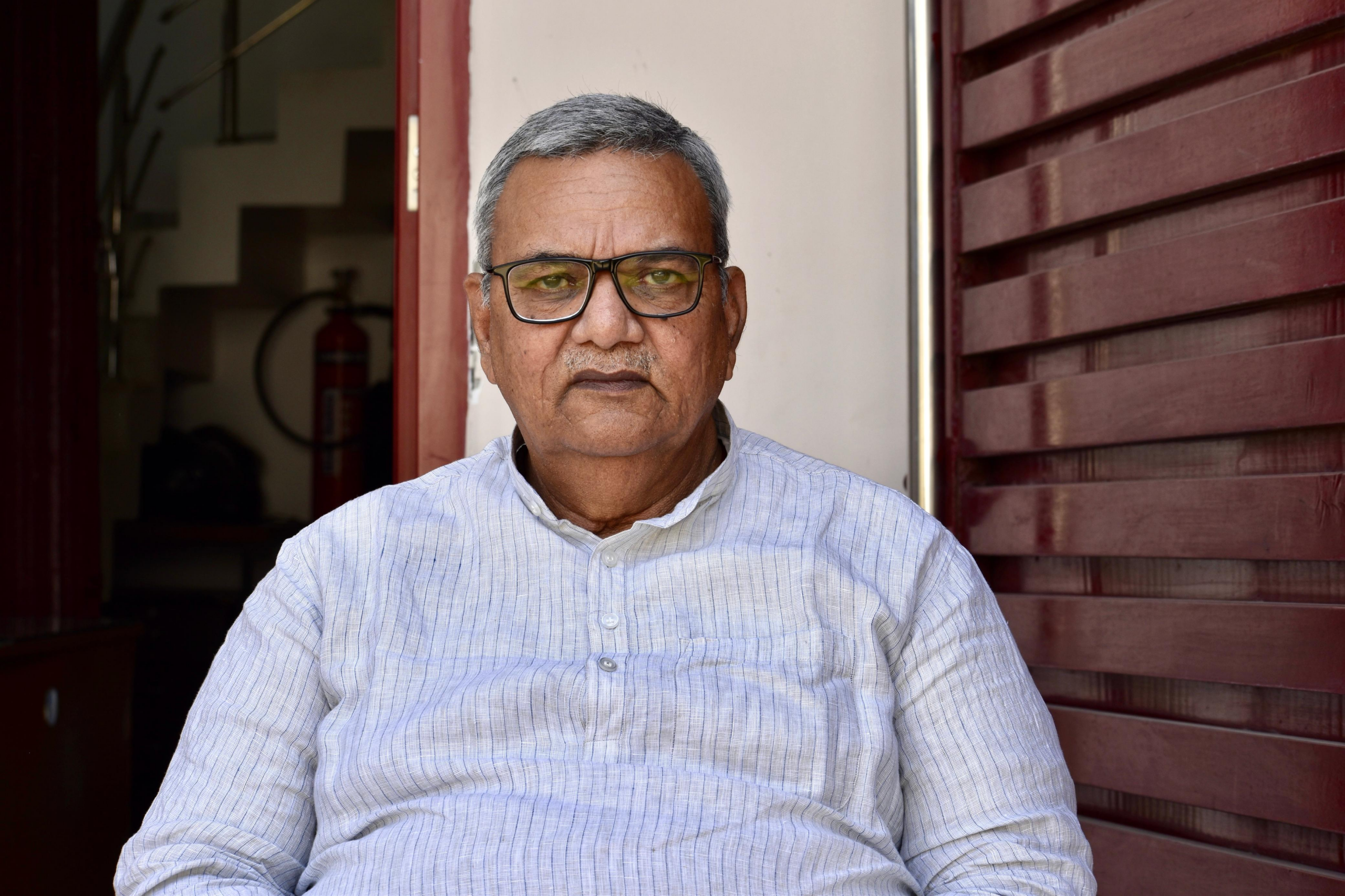
New Year Wishes and 40th Year Message by Shri Bharat Bhushan Ji
Listening Back, Looking Ahead: PANI’s 40th Year Podcast Series Begins
As part of its 40th year journey, PANI has begun a thoughtful podcast series that seeks not merely to recount institutional history, but to recover the ideas, questions and values that shaped its path over time. Conceived as a storytelling series across different phases of PANI’s journey, the podcasts are designed to help listeners understand how an organisation grows: not only through programmes and partnerships, but through moral choices, lived experience and sustained work with communities.
The first episode, Prishthbhumi, released in January, turns to the period before PANI formally came into being. Through its discussion, the episode explores the social and moral background that made such an institution necessary in the first place: the early influences that sowed the seed of social action, the people who offered guidance, the conditions that shaped the journey, and the historical circumstances that eventually gave rise to PANI. It is, in essence, a reflection on the deeper ground from which an organisation emerges.
The second episode, Udbhav, released in March, moves from the realm of moral impulse to the work of institution-building. Focusing on the years 1986 to 1990, it examines how PANI began evolving from a people’s initiative into a structured organisation, and how trust, discipline, listening and values had to be held together during that formative period. The conversation revisits key questions around registration, community confidence, early funding, professionalisation, organisational challenges and the lessons that phase still offers to young rural practitioners today.
Taken together, these two episodes do more than document the past. They invite viewers to understand PANI as a living institutional journey shaped by people, purpose and practice. As more episodes are scheduled across the year to cover later phases of growth and transformation, readers may find this a meaningful time to watch the series on PANI’s YouTube channel and follow the conversations still to come.
Prishthbhumi:https://www.youtube.com/watch?v=PZS1LdpFS4A&t=5s
Udbhav:https://www.youtube.com/watch?v=jVgx03-GMMw&t=1045s
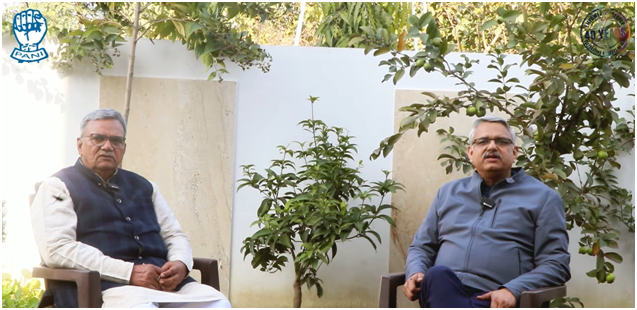
UDBHAV – Deo Datt Singh in discussion with Shri Bharat Bhushan Ji about PANI’s beginning years
Celebration of International Year of the Women Farmer (IYWF2026) Honouring Women Farmers, Season by Season
In 2026, as the United Nations and FAO observe the International Year of the Woman Farmer, PANI has been using its social media platforms to foreground the often under-recognised contribution of women farmers to agriculture, household care, nutrition and community resilience. Through videos, carousels and digital storytelling, the organisation has sought to connect a global call for recognition with the lived realities of rural women in India.
The significance of this international year lies in its clear message: women farmers are central to agrifood systems, yet they continue to face persistent barriers in access to land, services, finance, education and recognition. PANI’s communication around the campaign has responded to this reality with both gratitude and conviction, highlighting that women’s labour sustains not only fields and food production, but also care, nourishment and the everyday strength of households.
In its messaging, PANI has framed women farmers not as silent beneficiaries, but as knowledge holders, cultivators, caregivers and leaders whose contribution deserves public visibility and institutional support. The campaign has affirmed that leadership already exists among women farmers, and that the task before institutions is to walk alongside them – strengthening their access to rights and resources, amplifying their voices, and helping build a more just agricultural future.
This digital initiative is therefore more than a communication series. It reflects PANI’s larger commitment to stand with women farmers across seasons, to document and honour their lives with dignity, and to place their labour and aspirations more firmly within public discourse on agriculture and rural development.
Watch here: https://www.youtube.com/watch?v=m8UBdYgnLRg
International Year of the Women Farmer (IYWF2026)
When Girls Lead, Communities Move - EAG 2.0
In March, Tarun block in Ayodhya witnessed a powerful expression of what long-term community work can grow into: adolescent girls stepping forward not only as participants, but as leaders of collective change. Emerging from PANI’s sustained work with girls under the Empowering Adolescent Girls programme, Aarohi Sansthan has begun to take shape as a girl-led collective rooted in community ownership, confidence and public purpose.
With a vision to work across 97-gram panchayats, Aarohi Sansthan seeks to advance adolescent girls’ health and nutrition, education, skills, livelihoods, women’s rights, gender equality, self-reliance and youth leadership. That vision found a visible and inspiring public expression when, in collaboration with the Police Department and Mission Shakti, its 20-member leadership group brought together more than 500 adolescent girls for a 7-kilometre padyatra in Tarun.
The event was significant not only for its scale, but for what it represented. Through slogans, songs, public presence and collective participation, the padyatra carried a clear message of girls’ empowerment, dignity and social awareness into the wider community. Media reports and the public communication shared around the event reflected the breadth of participation and the strong partnership between community leadership and public institutions.
Most importantly, the girls themselves led the effort. From mobilising participants and building partnerships to organising the event on the ground, they demonstrated that leadership nurtured over time becomes most meaningful when it begins to stand on its own feet. Aarohi Sansthan is, in that sense, more than a new collective; it is a sign that community processes can become self-sustaining when girls are trusted, organised and given space to lead.
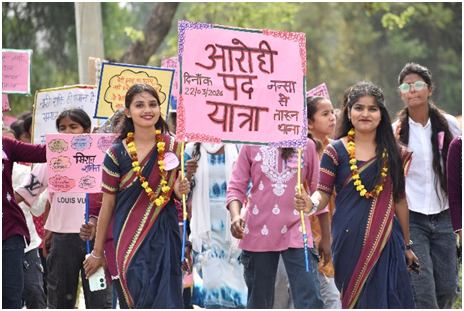
Aarohi Sansthan – An Organisation founded and led by Adolescent Girls of PANI’s EAG program in Tarun, Ayodhya
Planning the Next Chapter: PANI’s Strategic Direction for 2026–2030
During February and March, as PANI entered its 40th year, the organisation undertook a strategic planning exercise to shape its direction for 2026–2030. This was not treated as a routine internal process, but as a serious moment of reflection on how a grassroots institution with deep roots in Uttar Pradesh and Bihar can remain relevant, effective, sustainable and ready for the future.
The exercise built on the foundation of PANI’s previous strategic plan for 2021–2026, which had focused strongly on professional management, stronger human resource systems, branding and communication, public transparency, data and impact systems, better programme planning, collaboration with government, alliances in the sector and sharper resource mobilisation. In many ways, the new process marked both continuity and transition: continuity in values and purpose, and transition in the scale, clarity and institutional readiness now required for the years ahead.
Facilitated by ASK Training and Learning, the process was designed to be deeply participatory, bringing together board members, core management, senior leadership, programme teams, finance and HR colleagues to collectively assess strengths, weaknesses, opportunities and threats, and to make realistic decisions about the future. That participatory method mattered as much as the final document itself, because it created shared ownership and helped align different parts of the organisation around a common direction.
What has emerged is a strategy that is both grounded and ambitious. The new plan revises PANI’s vision to an “inclusive and resilient society” and its mission to “fostering an ecosystem that empowers people to transform their lives and society,” while sharpening the organisation’s focus across five major programme areas: gender and empowerment, climate change and livelihoods, health and nutrition, child development, and humanitarian response. It also sets out important organisational priorities, including stronger structure and leadership, future succession planning, a more purposeful HR system, onboarding of technical and knowledge partners, stronger financial sustainability, and the aspiration to emerge as a thought leader through a Centre of Excellence on Gender and Climate Change.
At its best, strategic planning is not only about setting targets. It is about asking whether an organisation is prepared – in culture, structure and imagination – to meet the future with honesty and intent. PANI’s 2026–2030 strategy reflects exactly that spirit: rooted in experience, sharpened by reflection, and directed toward deeper impact in the years to come.
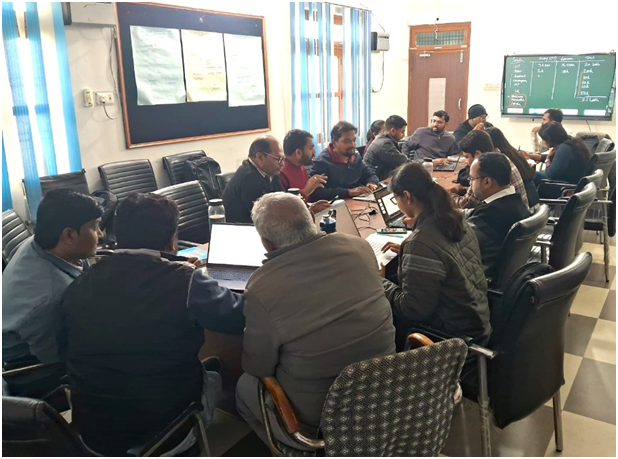
PANI’s Next Four Year Strategy Meeting
Kshitij: From Shared Practice to Shared Pages - The Journey of PANI’s Storytellers’ Lab
During the first quarter of 2026, PANI’s Storytellers’ Lab continued to grow as a meaningful space for reflection, writing and collective learning. What began in March 2025 as a workshop with colleagues drawn from different projects and backgrounds gradually deepened into a shared creative journey, where participants met regularly to learn something new, experiment with form, and engage more attentively with the experiences that shape their work and surroundings.
At the heart of this process was a simple but important belief: that stories are not separate from development work, but are often embedded within it – in everyday encounters, in moments of care, in questions of dignity, and in the lives of the communities PANI works with. The lab created a space where participants could pause, observe, listen and write with greater sensitivity, allowing creativity to emerge not as display, but as a way of seeing more truthfully.
Over these months, the lab evolved beyond a one-time training effort and began to take the shape of a continuing practice. Through monthly gatherings and writing exercises, members were encouraged to discover their own voice, try unfamiliar styles, and bring forward the textures of everyday life that often remain unnoticed in formal reporting. In this sense, the initiative has helped nurture not only better writing, but also a deeper culture of presence, connection and expression within PANI.
This creative process has now found a tangible outcome in Kshitij, a bimonthly flipbook magazine whose first issue was released in May 2026. As envisioned in its preface, Kshitij is a shared मंच – a collective space where poems, songs, stories and reflections come together as living traces of everyday experience, imagination and social commitment. More than a publication, it represents an emerging editorial culture within PANI: one that values rooted storytelling, honours ordinary lives, and keeps alive the courage to notice, feel and share. Read Here: https://heyzine.com/flip-book/b304f608f1.html& here: https://heyzine.com/flip-book/21ba2b2c3b.html
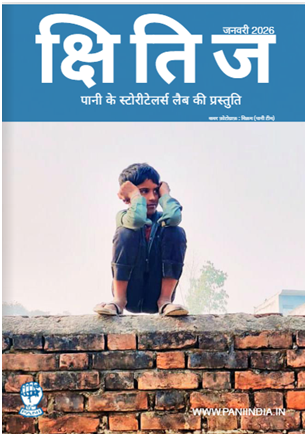
Kshitij – Jan 2026 – by PANI’s Storytellers’ Lab
PANI Partners with Kaveri University
PANI is pleased to announce a formal partnership with Kaveri University, marking an important step toward strengthening community-centred learning and advancing rural development through deeper academic collaboration. The partnership is expected to create meaningful opportunities for applied research, impact documentation, student internships and faculty engagement, helping connect field realities with academic inquiry in more sustained ways.
For PANI, the value of this partnership lies not only in institutional collaboration, but in the possibility of building a stronger bridge between knowledge and practice. Through field learning, collaborative research and co-designed skill-building efforts, the partnership aims to ensure that community knowledge and local wisdom inform academic processes, while academic engagement contributes practical insights to programmes on the ground.
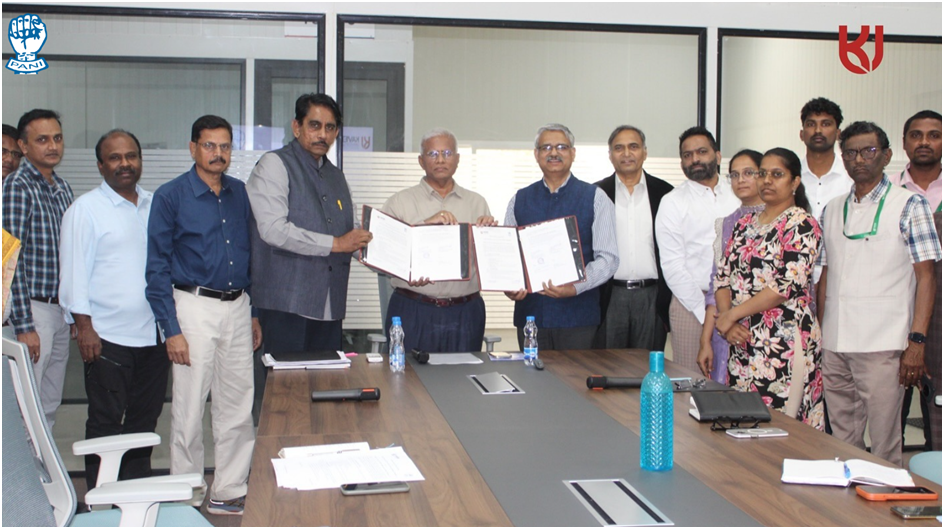
Partnership with Kaveri University
Holi Celebration: Reclaiming a Festival, Opening a Conversation
During the quarter, PANI’s Youth Mental Health Program created an especially thoughtful public moment by reimagining Holika Dahan as a culturally rooted marker day for emotional wellbeing. Conceived under the theme, “Fight the negative emotions, not the persons,” the initiative sought to connect a familiar community festival with a deeper conversation on how young people experience anger, fear, grief, guilt, anxiety and emotional distress in their everyday lives.
This effort reflects the distinctive approach of PANI’s Youth Mental Health Program, which is working with young people in rural eastern Uttar Pradesh through a preventive, promotive and stepped-care model delivered by trained and supervised non-specialist teams. Grounded in a social justice and equity lens, the program recognizes that mental health is shaped not only by individual experience, but also by gender norms, family relationships, exclusion, economic vulnerability and unequal access to support.
Within that wider vision, the Holika Dahan observance was designed not as a symbolic event alone, but as a safe and culturally meaningful space for reflection, release and connection. By drawing on the festival’s association with renewal and the triumph of good over harmful forces, the event invited young people to identify emotional burdens, express them in a collective and supported setting, and imagine healing as something that can be shared rather than endured alone. Music, public participation, youth-led facilitation and the involvement of community stakeholders were all built into the design so that the occasion remained both emotionally resonant and socially accessible.
Seen in the larger context of the program, this marker day illustrates how PANI is expanding the language of community mental health in rural settings. Through youth resource centres, group-based wellbeing interventions, family support, community engagement and care pathways for more serious distress, the program is helping build an ecosystem in which young people can seek support with dignity. The Holika Dahan initiative showed that when mental health is approached through local culture, collective reflection and community trust, it becomes easier to speak about difficult emotions – and easier, too, to begin healing together.
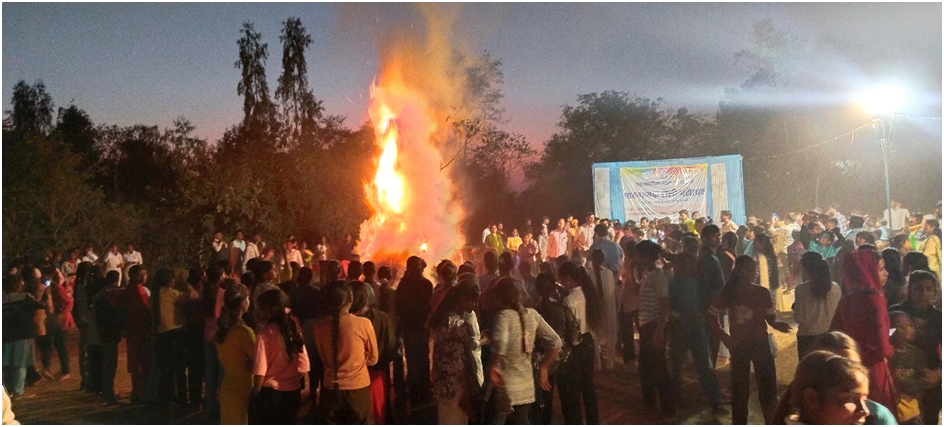
A different holi for youth mental wellbeing in Tarun
World Water Day Across PANI: Turning Awareness into Shared Responsibility
World Water Day this year became an important moment across PANI’s project locations to bring communities, farmers, local institutions, schools and frontline workers into a shared conversation on the future of water. Rather than treating the day as a stand-alone observance, PANI used it as an opportunity to strengthen public awareness around water conservation, responsible use, and the need for collective action in the face of a deepening water crisis.
Across different geographies, the message remained consistent – water conservation is no longer only a technical concern or a seasonal issue; it is now central to livelihoods, agriculture, health and community wellbeing. In farming areas, discussions focused on the visible decline of groundwater, the disappearance or weakening of traditional water sources, and the growing urgency of protecting water for both irrigation and daily life.
What stood out in these efforts was PANI’s emphasis on connecting awareness with practice. Farmers were encouraged to think about cultivation methods that reduce water stress, while communities were reminded of the importance of reviving local water bodies, improving recharge, and treating water as a shared resource rather than an individual asset. In other locations, schools, women’s groups, village-level forums and public representatives came together through rallies, creative activities, trainings, community dialogues and cultural presentations that helped carry the message beyond the event space and into everyday life.
The spirit of the campaign was equally important. PANI’s World Water Day efforts brought together voices from agriculture, horticulture, sanitation, local governance and community institutions, reinforcing the idea that meaningful water conservation requires cooperation across sectors. Songs, pledges, public discussions, student participation and recognition of local efforts all helped make the observance both practical and participatory.
Taken together, these activities reflected something larger than a single-day programme. They showed PANI’s continuing belief that sustainable water stewardship begins when communities understand the crisis, see their own role in responding to it, and act together to protect the resources on which life and livelihoods depend.
SAMANATA Fellowship in Action
Grounding New Fellows in Values and Practice
During the first quarter of 2026, orientation workshops were organized across cohorts under the SAMANATA Fellowship Program, marking an important beginning for a new group of fellows entering community-based work. The residential orientation process was designed not merely as an induction, but as a structured space for reflection, preparation and value-based grounding.
At the heart of these workshops was the effort to help fellows understand the larger purpose of the fellowship and the responsibility that comes with working closely with communities. The sessions introduced them to PANI’s institutional culture, clarified expectations and roles, and created an early foundation for disciplined, sensitive and accountable field engagement. At the same time, the workshops emphasized that social leadership must be rooted in both self-awareness and public values.
The learning journey brought together a range of themes essential to the fellowship experience. Fellows engaged with ideas around knowing oneself, understanding the Preamble and constitutional values, appreciating the functioning of Panchayati Raj Institutions and local governance systems, and learning how to read communities through mapping and observation. Together, these sessions helped place field practice within a wider ethical and democratic framework.
What made the orientation especially meaningful was its spirit of collective preparation. The process reflected careful coordination across teams and a shared commitment to ensuring that fellows begin their journey with clarity, confidence and a deeper sense of purpose. As similar workshops continue to be organised for different cohorts, they are helping shape the fellowship not only as a programme of engagement, but as a space for nurturing grounded, thoughtful and community-responsive young leaders.
International Women’s Day
On 8 March, International Women’s Day was observed across PANI teams as a time to celebrate the strength, dignity and dreams of women and girls. Bringing together adolescent girls, women, families, community members and frontline workers, these events created spaces where their voices could be heard and their journeys recognised.
Across teams, the day was marked with energy and purpose. Songs, dances, speeches, role plays and street performances by adolescent girls showed confidence, talent and courage. More importantly, they showed that girls are ready to speak for themselves and claim their place in society.
The celebrations also helped communities understand PANI’s long and steady work with women and girls. They reminded everyone that empowerment grows through education, health, nutrition, self-belief, leadership and equal opportunity. In many places, women and community supporters were honoured for standing with girls and encouraging their growth.
What gave the day its deepest meaning was the shared commitment it inspired. Public pledges for equality, respect, justice and opportunity turned the celebrations into something more than an annual event. Across PANI teams, the message was clear: when women and girls are trusted, encouraged and given room to lead, communities become fairer, stronger and more hopeful.