


SPANDAN – The Pulse of PANI
A Quarterly Bulletin
When we began this journey in 1986, we did not begin with a grand blueprint. What we had was a deep conviction: that people in rural India, when trusted and enabled, are capable of shaping their own development. Over the years, that conviction has only deepened.
Now, as we approach four decades of work, I find that what has sustained PANI is not only the relevance of our work, but the way in which we have chosen to walk with people – steadily, quietly, and with care. This quarter’s edition of Spandan offers a reflection of that approach. It is not just a collection of programmatic updates. It is a window into the questions we are asking, the relationships we are building, and the systems we are striving to influence from the ground up.
What stands out to me in these pages is not the scale of activity, but the orientation of our work. Whether it is the emergence of women-led agri-enterprises, renewed focus on early childhood education, efforts to advance nutrition and mental health, or our engagement with climate resilience and Panchayati Raj institutions – the common thread is our belief that development must be participatory, locally anchored, and built on trust.
In recent years, we have also learned to embrace change. The challenges facing rural communities today are complex – climate uncertainty, growing aspirations and structural inequality. No single organization can respond to these alone. What gives me hope is the way PANI continues to evolve – not by replacing what came before, but by building on it. By remaining open to learning, seeking long-term partnerships, and staying close to the lived realities of people.
I want to acknowledge the quiet commitment of our teams across the field, the insight of our partners, and the resilience of the communities we work with. If this bulletin holds value, it is because it captures their work – not just in outputs and outcomes, but in the intent behind each action.
As we share these stories, I hope they serve not only as documentation, but as a reminder – to ourselves and to those who walk with us – that the work of strengthening rural India is both necessary and possible. It demands patience, it requires humility, and above all, it must remain rooted in the idea of shared responsibility.
Thank you for taking the time to engage with Spandan. I look forward to continuing this journey – quietly, collectively, and with purpose.
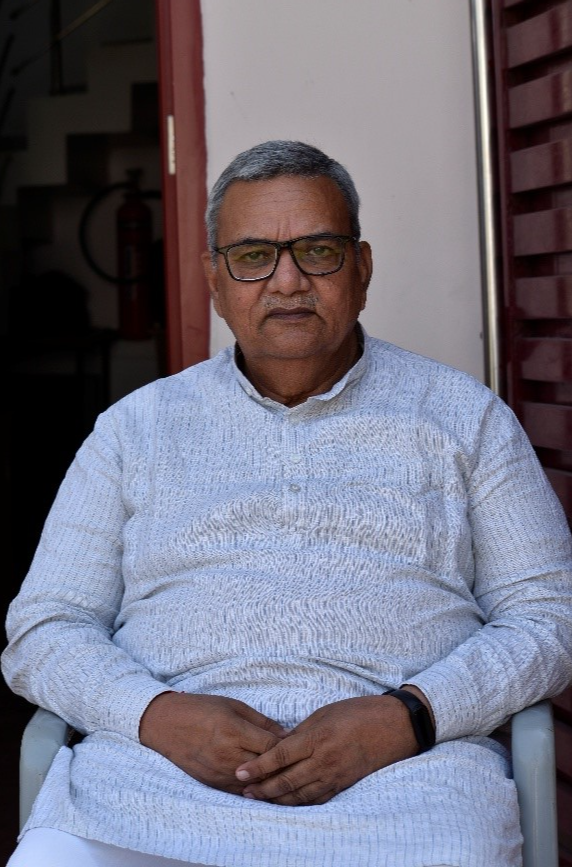
Bharat Bhushan, Founder Secretary, PANI
Milestones and Recognitions
A. Honouring Service that Stands the Test of Time
On June 7, 2025, the Seva Shikhar Samman – an annual recognition by Khushi Foundation and Disha Educational Society, celebrating those who advance social good against all odds – was conferred upon Mr. Deo Datt Singh, Director – Operations at PANI. The honour was presented by Hon’ble Agriculture Minister Shri Surya Pratap Shahi, acknowledging a lifetime of service dedicated to rural communities.
This recognition is not an individual accolade, but a quiet tribute to the principles of selfless service taught by our Gurus, the resilience of our field teams, the trust of communities, and the enduring partnerships that have shaped PANI’s work for nearly four decades.
At PANI, we have always believed that true change does not seek the spotlight. It grows in the shadows of quiet determination, in the daily struggles and victories of rural families, and in the collective resolve of those who walk alongside them.
We accept this honour with deep humility and a renewed commitment – to continue building resilient, just, and harmonious rural futures, where development is not charity, but a shared right and responsibility.
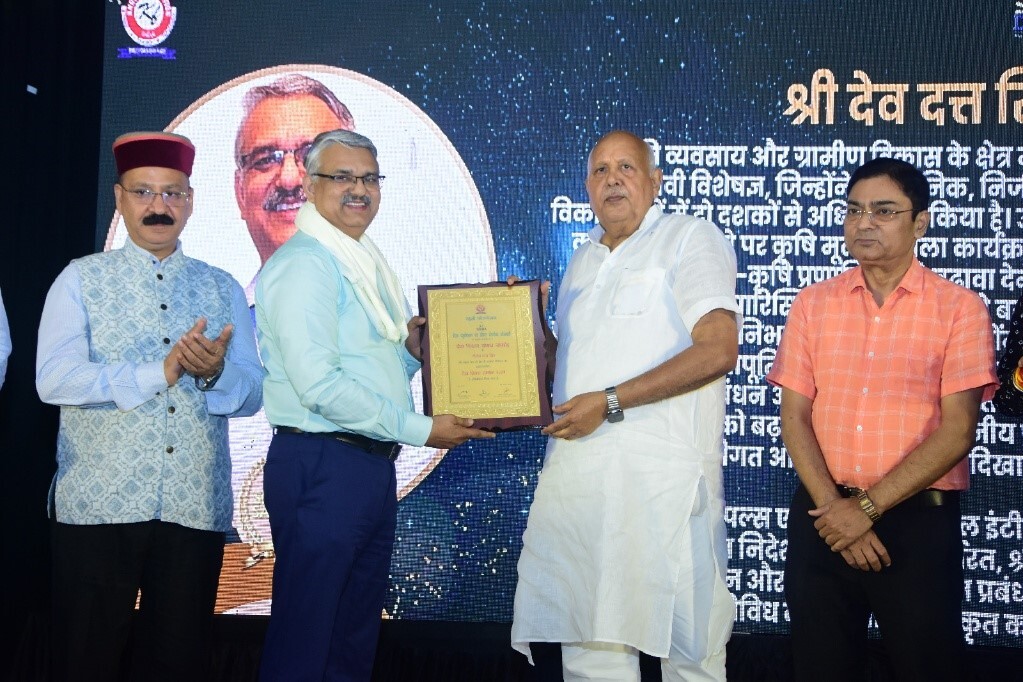
Mr. Deo Datt Singh, from PANI, being accorded the Seva Shikhar Samman
B. PANI’s Turmeric Initiative Featured by ICAR-IISR in National Souvenir
We are proud to share that PANI’s work on promoting turmeric cultivation in Balrampur, Uttar Pradesh, has been featured in the Golden Jubilee Souvenir (1975–2025) of the Indian Institute of Spices Research (IISR), Kozhikode), under the Indian Council of Agricultural Research (ICAR).
This recognition underscores the significance of our field-based innovations and grassroots partnerships in introducing turmeric as a high-value crop in the Rehra block of Balrampur. Through scientific collaboration with ICAR-IISR, our team facilitated varietal demonstrations (Pragati, Pitambari, and Rajendra Sonia), improved crop management practices, and enabled better seed access, irrigation, mechanization, and micronutrient use.
The publication acknowledges the challenges we encountered—such as the lack of quality seeds, storage facilities, and mechanization, but also highlights the opportunities: turmeric’s strong market demand, long shelf life, and disease resistance. The project helped ensure better yields, empowered local farmers, and strengthened our capacity-building work at the grassroots level.
Most notably, the Souvenir appreciates PANI’s collaborative model, where institutional expertise from ICAR-IISR and on-ground facilitation by community-based organizations intersect to deliver real impact.
This is not just a moment of pride, but a reaffirmation of our commitment to action research, farmer-centric innovation, and sustainable rural development.
We thank the IISR team and all our farmer collaborators in Balrampur who made this possible. Here’s to many more such partnerships rooted in trust, knowledge, and transformation.
We are PANI. We grow together. Read it here: https://drive.google.com/file/d/1qeduVztlRl2ZvFd20AnF_MDwIhGI5zob/view?usp=sharing
New Horizons: Projects Launched This Quarter
A. PANI and Rohini Nilekani Philanthropies Unite to Strengthen Rural Climate Leadership
In rural India, where lives are closely tied to seasons, soil and water, the impacts of climate change are deeply felt, yet rarely spoken of in local decision-making spaces. At PANI, we have long believed that the answers to these challenges lie within our communities themselves: in their knowledge, their resilience and their leadership.
We are privileged to partner with Rohini Nilekani Philanthropies, whose support will enable us to deepen this work through the “Augmenting Climate Change Resilience through Community Action” initiative, across 25 districts of eastern Uttar Pradesh.
This initiative will focus on nurturing grassroots leadership and local institutions, strengthening the ability of small farmers, women and Gram Panchayats to take collective action on climate resilience. At its heart is the conviction that sustainable change happens when society leads, and when governance systems and markets respond to the needs and priorities of the people they serve.
Through this partnership, we aim to:
- Build a cadre of local Climate Warriors, primarily women, who will anchor climate resilience conversations at the village level.
- Equip communities and Panchayati Raj Institutions to integrate climate-smart agriculture, water management and clean energy into their development planning.
- Facilitate linkages with government schemes and market opportunities, ensuring they reach those who need them most.
The journey has already begun. Together with our grassroots partner organizations, we are actively working in villages across 25 districts – mobilizing communities, building leadership and enabling climate-smart solutions where they matter most.
As this initiative unfolds on the ground, we look forward to sharing stories of change, challenges and collective learning.
Stay tuned for more updates from the field where resilience is taking root in rural communities.
B. Advancing Climate Resilience and Food Security: Launch of a Pilot with Small and Marginal Farmers in Barabanki
Climate change continues to deepen vulnerabilities for small and marginal farmers in eastern Uttar Pradesh, whose livelihoods depend on fragile natural resources and unpredictable weather. Erratic rainfall, rising temperatures, and declining soil and water health have made food security increasingly precarious for these communities.
In response, PANI, with the support of Andheri Hilfe Bonn, has initiated a 14-month pilot project across Nindura, Fatehpur, and Harakh blocks of Barabanki district. This effort aims to strengthen the climate resilience and food security of 1,000 small and marginal farming households – those most affected by climate variability and market insecurities.
The pilot will work closely with farmers to:
- Promote climate-resilient and water-efficient agricultural practices, crop diversification, and improved soil health.
- Build strong farmer collectives to increase access to quality inputs, better market prices, and government schemes that often remain out of reach for rural communities.
- Facilitate practical training and continuous field support to enable informed decisions and sustainable farming practices.
At PANI, we believe that real change is built through perseverance and shared purpose. This initiative draws on the strength of local communities, the commitment of our field teams and the solidarity of partners who share our vision for equitable and sustainable rural futures.
As the pilot unfolds, we will continue to learn alongside the farmers, refining approaches that can meaningfully improve livelihoods while protecting natural resources. This is an important step in our broader efforts to build pathways of resilience for rural families facing the frontlines of climate change.
C. PANI Joins the Mission with Tata Trusts to address Undernutrition in Eastern Uttar Pradesh
Malnutrition remains one of the most urgent yet under-addressed challenges in rural Uttar Pradesh, where young children and women continue to face poor nutrition, anaemia, and limited access to essential services. To address this, PANI has joined a multi-partner initiative supported by Tata Trusts, alongside Grameen Development Services (GDS), SATHI-UP and EKJUT, to improve the nutritional well-being of vulnerable populations through community engagement and system strengthening.
As one of the implementing partners, PANI is leading the work in Balrampur and Siddharth Nagar districts, where the burden of child stunting, wasting and anaemia remains critically high. The project focuses on creating change at the household and community level by improving both awareness and access to nutrition services.
Key focus areas of the project include:
- Mobilizing pregnant women, lactating mothers and caregivers through Participatory Learning and Action (PLA) meetings, home visits and community awareness efforts.
- Strengthening frontline workers – Anganwadi Workers, ASHAs, and ANMs – to deliver improved nutrition and health services.
- Supporting existing government platforms like VHSNDs, Poshan Panchayats and AAA meetings, to improve outreach and service delivery.
- Promoting better child feeding practices, maternal nutrition and the management of severe and moderate acute malnutrition among children.
In Balrampur’s Utrola and Sriduttganj blocks, and Siddharth Nagar’s Birdpur and Naugarh blocks, our teams are working closely with communities and local institutions to build practical solutions that address the root causes of undernutrition. Through a combination of capacity-building, behaviour change and better convergence with government programs, we aim to improve the health outcomes of children and women who are most in need.
The project has commenced in the field and our teams are already engaging with mothers, caregivers and frontline workers to build momentum for change.
D. PANI partners with Cipla Foundation to Advance Menstrual Health with Dignity
We are proud to announce our new partnership with Cipla Foundation, who joins PANI’s journey in advancing community health and dignity for adolescent girls in rural Uttar Pradesh.
Despite years of progress in rural development, menstrual health continues to be surrounded by silence and stigma. In Sohawal block of Ayodhya district, many adolescent girls still face barriers in accessing safe menstrual hygiene products, resulting in health risks, school absenteeism, and social exclusion.
In response, PANI, with the support of Cipla Foundation, has launched a 10-month pilot project to improve affordability, availability and accessibility of menstrual hygiene products. The initiative will work across 10 Gram Panchayats, directly engaging over 2,000 adolescent girls through:
- Menstrual health education and behaviour change sessions,
- Girl-led micro-enterprises that build local supply chains for affordable menstrual products,
- Community conversations to break stigma and build support for safe hygiene practices.
The project goes beyond product distribution – it aims to shift community mindsets, equip girls with entrepreneurial skills, and create lasting change rooted in agency and dignity. As we begin this partnership, we reaffirm our commitment to making menstrual hygiene not a privilege, but a right – accessible, affordable and stigma-free.
Stay connected as we share stories from the ground in the coming months.
Anchoring Agriculture and Livelihoods
A. Abhayam Krishi Kendra: Empowering Rural Farmers through Community-Led Agricultural Solutions
In India’s agrarian landscape, where small and marginal farmers account for nearly 86% of agricultural households, the challenges are not just of low productivity but of limited access – access to timely inputs, affordable machinery, accurate advice and reliable markets. Rising input costs, water scarcity, declining soil health and the uncertainties of climate change have placed additional burdens on these farmers, particularly in resource-poor regions like eastern Uttar Pradesh.
While agriculture remains a family occupation in these regions, women carry a disproportionate share of responsibilities – managing farms, livestock and food security – yet they are often excluded from decision-making roles in markets, cooperatives and farm enterprises. The potential of women to lead community-based agri-enterprises, provide last-mile services and strengthen local economies remains largely untapped.
Recognizing these gaps, PANI, under the PRUSKAR project supported by the Hindustan Unilever Foundation (HUF), in collaboration with local farming communities, has launched the Abhayam Krishi Kendra (AKK) initiative – a practical, ground-up response to the pressing needs of smallholder farmers.
Abhayam Krishi Kendra: A Practical One-Stop Solution
The Abhayam Krishi Kendras (AKKs) are designed to serve as integrated agricultural service centres, led by trained women agri-entrepreneurs from within the community. These centres aim to provide:
- Quality agricultural inputs such as seeds (vegetables, cereals, pulses, fodder) and bio-fertilizers.
- Organic solutions including vermicompost and eco-friendly crop protection materials.
- Nursery development support, enabling farmers to raise their own seedlings.
- Soil and water testing, empowering farmers to make data-driven crop and input choices.
- Rental services of farm machinery, reducing cost and labour for small farmers.
- Animal feed for better livestock health and integrated farming.
- Expert agri-advisory and market linkages, helping farmers improve productivity and secure better prices.
Each AKK covers two Gram Panchayats, supporting over 400 farmers and is run by a local woman entrepreneur who has completed a 40-day certified training and secured necessary licensing. This decentralized model brings essential agricultural services closer to farmers’ fields, saving them time, cost and travel to distant market towns.
Growing Scale and Reach
The initiative has witnessed remarkable growth in a short time. As of July 2025:
- 150 Abhayam Krishi Kendras have been established across Gonda and Shravasti districts.
- The first batch of 70 AKKs was inaugurated on 5th April 2025, and another 80 women agri-entrepreneurs have recently completed their certification, with their centres set to open in August 2025.
- 16 of these centres are located in Ikauna block of Shravasti, while the rest are operational across various blocks in Gonda district.
Why This Matters
Abhayam Krishi Kendras are not just service delivery points. They represent a shift in how rural agricultural ecosystems function:
- Farmers gain direct access to inputs and services without middlemen.
- Women step into leadership roles as agri-entrepreneurs and trusted advisors in their communities.
- The farming system moves towards climate-smart and resource-efficient practices, with water conservation and sustainable input use at its core.
- The local economy benefits through the circulation of income within the community, rather than it flowing outward to distant suppliers and traders.
- The Road Ahead
- This initiative is an ongoing journey of learning and scaling. As these centers stabilize, the next steps include:
- Strengthening supply chains through partnerships with Farmer Producer Organizations (FPOs) and government schemes.
- Enhancing farmers’ market access beyond the village level.
- Facilitating peer-to-peer learning networks among women agri-entrepreneurs to share experiences and solutions.
A Powerful Change
In rural Uttar Pradesh, where access to a single reliable seed or advice at the right time can change a farmer’s season, the Abhayam Krishi Kendras are already making a difference. They are quiet enablers – bridging gaps in knowledge, services, and markets – while fostering a new generation of women-led rural enterprises.
The journey has only begun, but the foundations of a more resilient, inclusive, and farmer-led agricultural system are being laid – one village, one entrepreneur, one crop at a time.
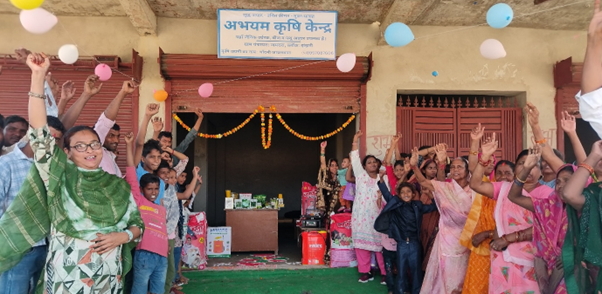
Abhayam Krishi Kendra (AKK) Launch Event
A. Growing a Greener Future Together – World Environment Day at PANI
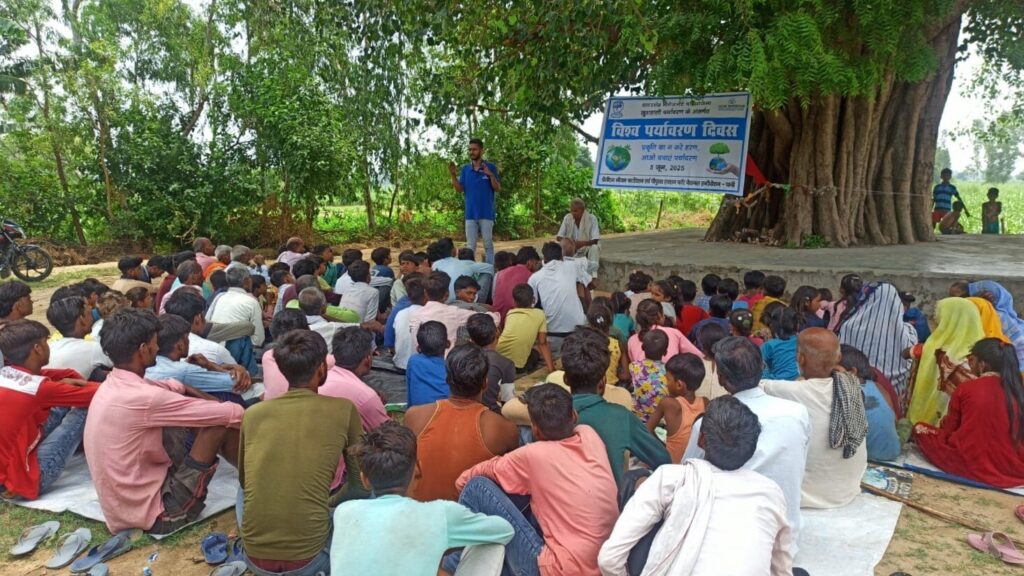
This World Environment Day (5th June 2025), across the villages of Eastern Uttar Pradesh, environmental action was not symbolic – it was personal, practical and community-led.
PANI, in collaboration with Gram Panchayats, frontline workers and district officials, facilitated plantation drives and awareness campaigns across over 1,000 Gram Panchayats in Gonda, Shravasti, Siddharthnagar and Hardoi districts, under various programs like PRUSKAR, ACCES and Hariyali.
These efforts are part of PANI’s ongoing work to build climate-resilient agriculture, conserve water, reduce greenhouse gas emissions and strengthen rural communities’ participation in local governance and natural resource management.
In Gonda and Shravasti, large-scale plantation campaigns brought together farmers, women leaders, Panchayat representatives and agriculture officials. In Siddharthnagar’s Birdpur block, over 500 community members gathered to learn about water-smart agriculture and the importance of protecting local ecosystems. The Aarohi EAG-SDR team led a special drive to plant Moringa saplings, highlighting their nutritional and ecological benefits.
In Hardoi, focused sessions with women leaders emphasized shared responsibility for watershed protection and sustainable farming. Across all locations, the message was clear: plantation is not just about planting trees – it is about restoring degraded soils, reducing heat stress and drought risk and creating lasting value for farming households.
These actions were strengthened by collaboration with the Departments of Horticulture, Agriculture and Panchayati Raj, along with local frontline workers – ASHAs, Anganwadi workers and Panchayat Assistants.
As climate risks grow, it becomes essential that rural communities are not only aware of environmental challenges but equipped to act together, with shared responsibility and local leadership.
For us, this is not a one-day event. It is part of a larger journey to build villages that are resilient, self-reliant and in harmony with nature.
Democratizing Water, Empowering Communities
A. Strengthening Grassroots Water Governance: Reflections from the DWLL State-Level Capstone Workshop
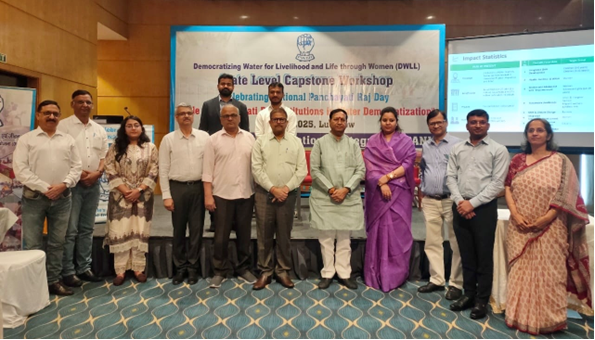
State Level Capstone Workshop – DWLL Project 25th April
On April 25, 2025, PANI convened the State-Level Capstone Workshop under the Democratizing Water for Livelihood and Life (DWLL) Project in Lucknow, bringing together elected leaders, government officials, civil society partners and community representatives. The event marked both a culmination and a beginning – reflecting on the journey so far and setting directions for the future of community-led water governance and women’s leadership in Mall block, Lucknow, one of the state’s most water-stressed regions.
The DWLL Journey: Where Communities Lead
Launched in 30 Gram Panchayats of Mall block, DWLL has been a deep, participatory effort to equip women’s collectives (CBOs) and Panchayati Raj Institutions (PRIs) to design, implement, and monitor water-centric Gram Panchayat Development Plans (GPDPs). Through training, participatory workshops, and hands-on planning support, the project enabled communities to move from passive recipients to active planners of water resources – anchoring livelihoods, climate resilience, and local development around water.
As Jagdish Giri, PANI’s Head of Programs, reminded participants: “This journey is not of an organization, but of the people themselves.”
Celebrating Outcomes, Preparing for the Future
The workshop created space for voices from the ground to be heard. Gram Pradhans like Smt. Sanyogita Singh of Atari shared how water planning and collective action have sparked new confidence in their villages. Government officials such as BDO Sarjana Srivastava highlighted the visible impact in villages like Amlauli, Dhakwa, and Atari – where water conservation and community engagement are no longer just plans on paper but living practices.
Project learnings were shared:
- Water-centric GPDPs prepared and implemented in 30 Gram Panchayats.
- Women’s groups and Gram Sabhas actively leading discussions on water and livelihoods.
- Efforts underway to register a Farmer Producer Company (FPC) to sustain livelihood resource centres beyond the project period.
Discussions also pointed to emerging challenges: the need for deeper digitalization in governance, ensuring local resource mobilization.
A Collective Commitment to Grassroots Democracy
As the project nears completion, PANI reaffirmed its commitment to sustaining this work beyond project timelines – by nurturing local leadership, supporting community enterprises, and strengthening platforms for participatory governance.
The DWLL Capstone Workshop was more than an event. It was a collective pause to celebrate how far communities have come, and a reminder of the work still ahead in democratizing water and livelihoods, with women at the forefront.
B. Learning Beyond Boundaries: Farmers and Leaders Explore New Horizons Under the DWLL Project
At the heart of rural change lies curiosity – the willingness to step beyond what is known, listen deeply and learn from others who have walked similar paths. Under the Democratizing Water for Livelihood and Life through Women (DWLL) project, PANI facilitated two transformative exposure visits this April, enabling community leaders, farmers and women entrepreneurs to engage with living examples of sustainable agriculture, water stewardship and democratic governance.
Women Farmers and Confederation Leaders at IIVR, Varanasi
From 15–17 April 2025, a group of 60 women farmers and Block Confederation leaders from the DWLL villages travelled to the Indian Institute of Vegetable Research (IIVR), Varanasi. The visit opened doors to practical knowledge on water-efficient vegetable cultivation, advanced seed varieties and low-cost farming technologies.
In the fields and laboratories of IIVR, they learned:
- How grafting techniques improve crop resilience.
- The benefits of vermicompost, mushroom cultivation, and micro-irrigation in enhancing both productivity and sustainability.
- How simple weather monitoring tools and drip irrigation can optimize water use in increasingly fragile farming landscapes.
For many women farmers, this was the first time they saw science and traditional knowledge meet so seamlessly—offering practical steps they could take home to improve their fields and livelihoods. They returned not only with new ideas but with the confidence to try something different.
Gram Pradhans Visit Model Villages in Maharashtra
A few days earlier, from 8–12 April 2025, 10 Gram Pradhans and 6 government officials from Mall block embarked on a learning journey to Hiware Bazar and Ralegan Siddhi, two of India’s most iconic villages for participatory governance and water-led development.
In Hiware Bazar, they walked the lanes where every household contributes to the Gram Panchayat’s vision – where rainwater harvesting, water budgeting and collective planning have transformed a drought-prone village into a prosperous, self-reliant community. They met Popatrao Pawar, whose leadership reshaped Hiware Bazar’s destiny and learned how transparent governance, community contributions and local revenue generation create lasting change.
In Ralegan Siddhi, they sat with Anna Hazare, reflecting on the power of self-discipline, people’s participation and ethical leadership in building vibrant rural communities. They saw how water conservation practices, coupled with strong social cohesion, can rejuvenate entire landscapes and livelihoods.
A Step Forward in the DWLL Journey
For both farmers and local leaders, these visits were windows into what is possible when communities take charge of their own future. Conversations during the return journeys were filled with resolve:
- To introduce water budgeting in their Gram Panchayats.
- To promote mushroom farming and vermicompost units in their clusters.
- To strengthen Gram Sabha processes so that planning and decision-making become truly participatory.
At PANI, we believe such learning spaces are essential. Exposure visits like these bridge gaps between aspiration and action, helping communities realize that sustainable change is not a distant dream it is already happening in villages like theirs, shaped by ordinary people with extraordinary commitment.
The work of adapting these lessons has begun. In the coming months, we look forward to sharing how these insights take root in our villages, turning learning into action and vision into reality.
Human Development: Health, Wellbeing and Education
A. PANI at the World Health Summit Regional Meeting 2025: Strengthening Community-Led Health Solutions
The recent World Health Summit Regional Meeting 2025 in Delhi brought critical conversations to the forefront such as universal health coverage, climate-induced health risks, mental health, maternal care and digital health transformation. These are not just emerging priorities in global health; they are everyday realities in the rural communities where PANI works across Uttar Pradesh.
For decades, PANI has been advancing these agendas through community-rooted models – whether in adolescent and maternal health, mental wellbeing, nutrition or WASH. Our work places women, youth and frontline workers at the centre of solutions, driving change through local leadership, trust and practical innovation.
The summit’s focus on equity, inclusion and youth engagement resonates strongly with our approach. As global frameworks increasingly recognize the need for local wisdom and participatory models, PANI stands as a bridge – connecting community experience with evidence-based solutions, dialogue and partnerships.
As we continue this journey, we remain open to collaborations that are globally informed but locally anchored, where solutions are not delivered to communities, but co-created with them.
B. Mental Health Awareness Week at PANI
Breaking the Silence: PANI’s Youth Wellbeing Program and the Growing Conversation on Mental Health
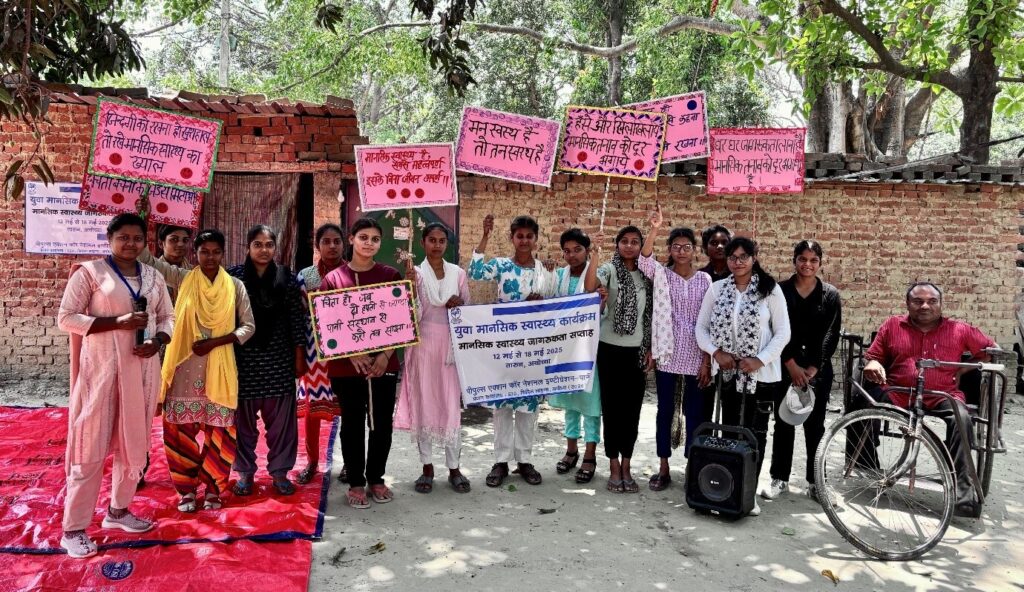
Mental health Awareness Week at PANI – 12th to 18th May 2025
In the rural regions of rural Uttar Pradesh, mental health challenges have always existed, but rarely spoken of. For many young people, especially after the pandemic, feelings of anxiety, loneliness and emotional exhaustion deepened in silence, unnoticed and unsupported.
Through the Youth Wellbeing Program (YWB) in Tarun block, Ayodhya, supported by Indira Foundation and shaped by technical partners like Sumunum, PANI has been working to bring mental health out of the shadows and into the everyday conversations of families, friends and communities.
Over the past year, across 97 Gram Panchayats, more than 14,000 youth have been gently engaged in screening conversations using tools like PHQ-9 and GAD-7. What began with hesitation and guarded silences is now opening into trust-filled spaces where young people feel seen and heard, sometimes for the first time.
But this is not only about counselling or screening tools. As the team shared during Mental Health Awareness Week (May 12–18, 2025), one of the most important lessons has been simple: trust is non-negotiable. Young people watch closely – how a person listens, who they talk to and whether they truly care. Only when they feel safe, do they open up.
This growing trust has reached families too. What once caused suspicion, confidential conversations between a youth and a mental health worker, is now slowly understood as care, not secrecy. Parents and communities have seen changes in their children’s confidence, speech and relationships. And, in a quiet but powerful moment this May, adolescent girls from two villages took their concerns about unsafe public spaces directly to local authorities making their world safer, or at least a lot less risky.
Yet, this is just a beginning. Mental health services remain scarce, India has less than one psychiatrist for every 100,000 people, mostly concentrated in urban centres. The road ahead must include stronger referral pathways and more inclusive mental health support, extending beyond youth to farmers, migrants, women and elderly – each carrying their own burdens of silence.
What gives hope is this shift: mental health is no longer an invisible struggle hidden behind closed doors. It is becoming a part of how communities care for one another, not as charity or obligation, but as shared humanity.
The journey is long. But with every honest conversation, every safe space created, and every life touched with compassion, we walk one step closer to a world where mental wellbeing is seen not as a luxury, but as a basic part of life.
You may read the blog here: https://paniindia.in/mental-health-changing-perceptions-and-persisting-gaps/
C. Deepening Foundations in Early Childhood Education: Learning from QUEST to Strengthen Buniyaad in Balrampur
The success of any educational reform lies not merely in curriculum design or infrastructure upgrades but in the capacity of frontline workers to translate developmental frameworks into meaningful daily experiences for children. Recognizing this, the Buniyaad Early Childhood Care and Education (ECCE) Project, supported by Tata Trusts and implemented by PANI in Balrampur, has consistently prioritized the professional development of its Field Coordinators and Anganwadi Workers.
Yet, as implementation progressed, a crucial gap became evident: while Anganwadi Centres had begun adopting joyful learning spaces and basic pedagogical activities, the understanding of progression in children’s learning stages – especially in cognitive and language development – remained superficial. The need was not only for training but for experiential learning, where PANI’s field team could immerse themselves in environments where early learning was being implemented with depth and clarity.
Why This Exposure Was Necessary
QUEST, an organization with long-standing expertise in ECCE, offered such a space. Its Meri Anganwadi framework, with a structured yet flexible curriculum mapped across learning stages, aligned with Buniyaad’s objectives but had reached greater operational maturity. Learning from QUEST’s work in Nashik was not about adopting a new model but strengthening our existing practices with nuance, reflection, and evidence-backed methodologies.
What We Did: A Journey of Observation, Practice, and Reflection
From 23 to 28 June 2025, a team of 18 Field Coordinators, 3 Block Coordinators, and an MIS specialist from PANI participated in an intensive residential training and exposure at QUEST’s learning centres in Sinnar block, Nashik.
The engagement was thoughtfully structured:
- Reviewing foundational concepts from Stages 1 to 3 and then deeply engaging with the more advanced Stages 4 and 5, covering early literacy, numeracy and socio-emotional learning.
- Field Coordinators practiced activities hands-on, followed by peer feedback and mentor observations – an essential shift from theoretical understanding to reflective practice.
- Visits to model Anganwadi Centres allowed participants to observe classroom dynamics, understand how children’s engagement is nurtured and reflect on the teacher’s evolving role from instructor to facilitator.
Perhaps most importantly, the training created a space for the team to acknowledge challenges honestly – whether in managing classroom transitions, sustaining children’s attention, or adapting learning to the local language environment.
What We Learnt
Several key insights emerged from this exposure:
- Learning progression matters: Activities must be planned not as isolated tasks but as part of a continuum that builds upon what children already know.
- Trusting the child’s agency: Rather than focusing only on teacher delivery, facilitators must watch how children engage, question, and explore.
- Feedback is essential: Supporting Anganwadi Workers requires meaningful, timely feedback—not checklist monitoring.
- Capacity-building is a process, not an event: The field team itself must engage in continuous learning if they are to enable the same for Anganwadi Workers.
How This Will Strengthen Buniyaad in Balrampur
Returning from this exposure, PANI’s field team is better equipped to:
- Guide Anganwadi Workers beyond activity implementation toward facilitating holistic learning experiences.
- Identify where children are struggling and adapt support accordingly, especially as they transition to primary school.
- Strengthen on-the-ground mentoring practices, making classroom observations more reflective and solutions-focused.
- Deepen parent and community engagement by explaining how seemingly simple classroom activities build lifelong learning foundations.
Looking Ahead
This exposure is not an endpoint but a foundation. As Buniyaad evolves in Balrampur, regular field-based reviews, sector-level training, and the creation of an Activity Bank contextualized to local needs will ensure that learning never stands still.
The vision remains clear: by empowering those who teach, we prepare children not just for school, but for life, with confidence, curiosity, and joy.
D. Building Strong Foundations: Buniyaad’s Journey in Early Childhood Care and Education
When PANI began the Early Childcare and Education (ECCE) Project – Buniyaad in rural Uttar Pradesh, the goal was simple yet transformative: to ensure that children step into primary school with joy, curiosity, and confidence – and that teachers are ready to welcome them with care and understanding.
Supported by Tata Trusts, Buniyaad has worked over the past year with 436 Anganwadi Centres, transforming 80 of them into model centres. The approach focuses on three pillars:
- Creating safe, stimulating spaces for early learning, equipped with play corners and ECCE materials.
- Strengthening the capacities of Anganwadi Workers and Helpers through regular training and mentoring.
- Engaging parents and communities, making early learning a shared responsibility, not a one-sided service.
The journey has not been without challenges – low attendance, limited community involvement, coordination gaps between Anganwadis and primary schools, and even infrastructural barriers like floods and electricity shortages. But through consistent efforts and support from district, block, and Panchayat authorities, change has taken root.
Over the past year, we have conducted school readiness assessments for 260+ children, made over 3,600 home visits, and facilitated exposure visits for officials to build deeper system ownership.
Today, signs of transformation are clear. Children arrive at Anganwadi Centres eager to learn. Parents remain engaged. Anganwadi workers lead with growing confidence.
Buniyaad’s work is far from over. But with every child who smiles in learning, and every community that believes in its future, we take one step closer to building strong educational foundations for rural India.
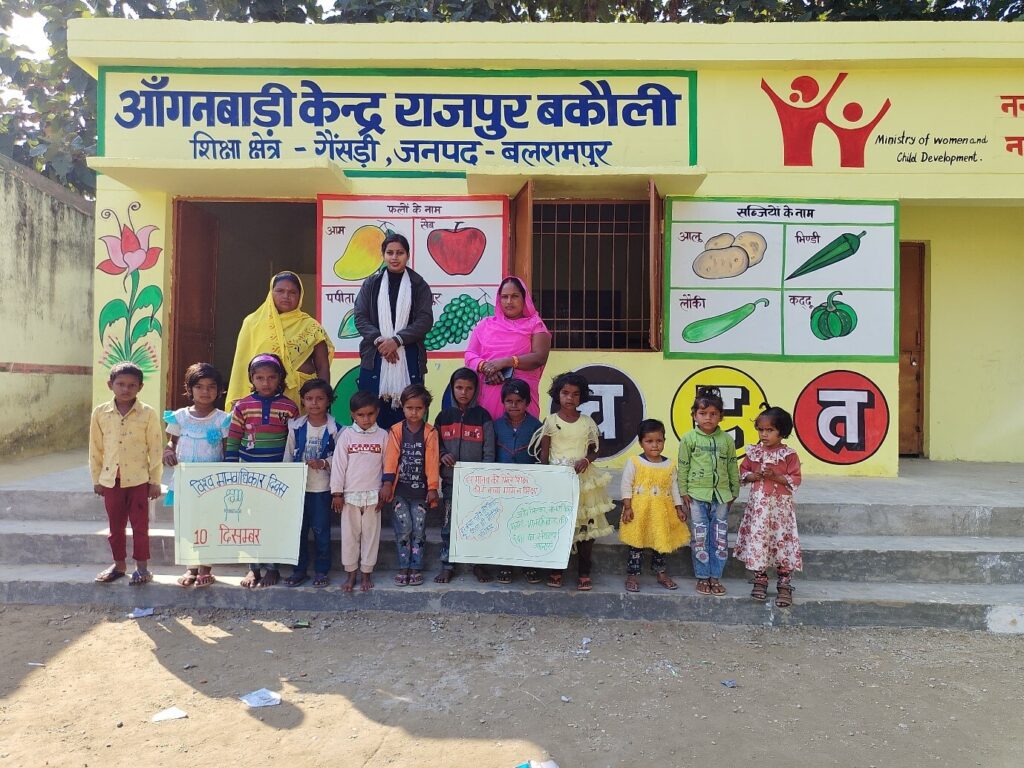
A Renovated Anganwadi Centre in Balrampur
Culture of Reflection: Stories from Within
Presenting ‘Kshitij’ – A Glimpse Into the Stories We Carry Within
Stories have always been woven into PANI’s work – whether in field diaries, in conversations beneath banyan trees, in training hall laughter, or in the quiet reflection after a long day in the villages. But over time, as our programs grew and our teams spread across new geographies, a deeper question arose:
Were we taking the time to pause, reflect, and hold space for the stories behind the data? Were we truly listening to what these stories were telling us about ourselves, our communities, and our shared purpose?
In response to this, we began The Storytellers Lab – not as a training on writing or communication, but as an invitation to slow down. To explore where our stories come from. To reconnect with the storytelling traditions we grew up with – in songs, rituals, festivals, and family gatherings – and to recognise that storytelling is less about crafting perfect narratives and more about naming what we already carry inside us.
Over the course of the Lab, participants explored personal narratives, reflected on their field experiences, and found creative ways – poetry, short reflections, and sometimes even silence – to express what they had long felt but perhaps never voiced. The Lab became a shared space for vulnerability, humour, doubt, courage, and imagination. It reminded us that in the rush of program goals and timelines, it is these small, quiet stories that keep us connected to why we do what we do.
And now, we are happy to share the first collective expression of this journey – ‘Kshitij’, a reflection of the voices and lived experiences of our teams.
Kshitij is a shared space where personal reflections, work experiences and everyday observations meet. A space where the pulse of rural life, the resilience of farmers, the dreams of young girls, and the questions that shape our work find thoughtful expression.
We invite you to read this first edition, reflect on it, and share it within your circles:
Read Kshitij (https://heyzine.com/flip-book/43a9475aa3.html)
This is only the beginning. We hope that Kshitij continues to grow, awakening more stories within us and reminding us that every one of us, no matter our role, holds stories that matter. And that storytelling at PANI will always be a way to stay connected, to each other, to our communities, and to our purpose.
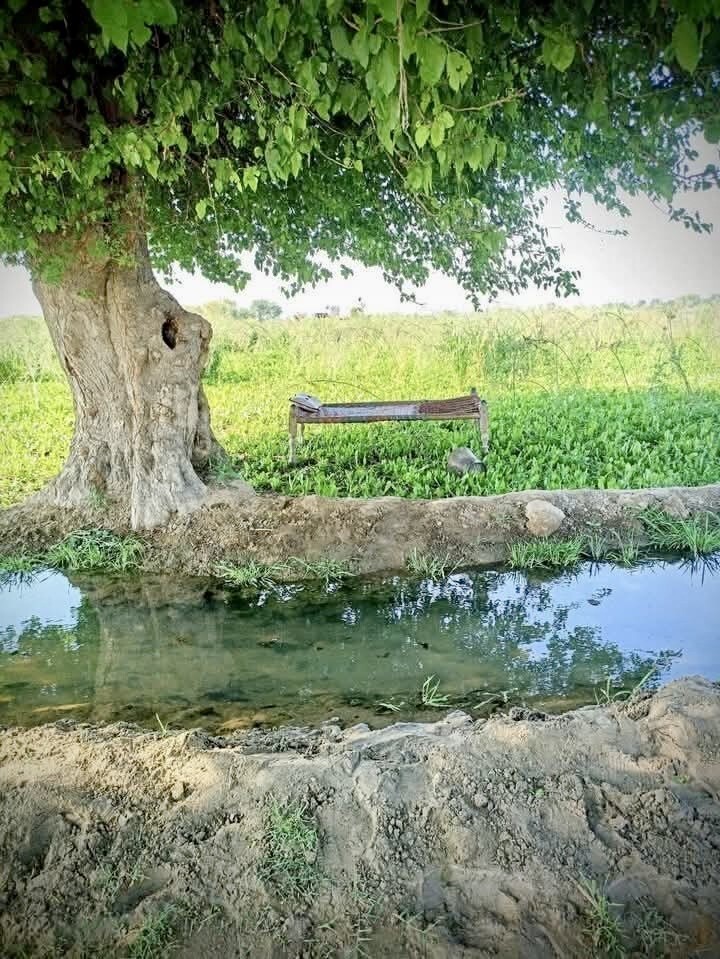
Kshitij Cover Picture – MAY 2025